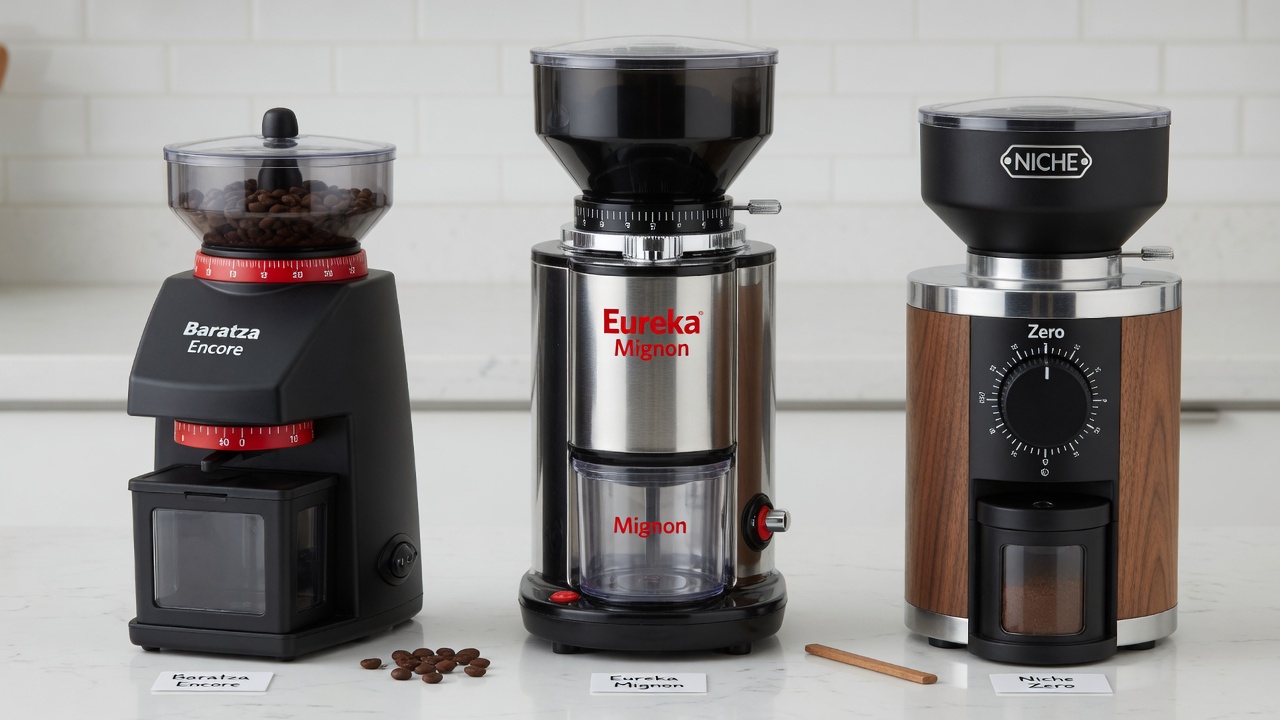
The grinder is the most important piece of espresso equipment you own. More important than your machine. A $2,000 espresso machine paired with a mediocre grinder will produce mediocre shots. A $500 machine paired with a great grinder will produce excellent shots.
Under $300, the field narrows fast. You want stepless adjustment, low retention, consistent particle distribution, and burrs that hold up to daily use. This guide breaks down the real-world winners - grinders that home baristas actually buy, use every day, and recommend after 1,000+ shots.
Why Your Grinder Matters More Than Your Espresso Machine
Espresso is ground coffee extracted under pressure. The grind determines everything: flow rate, contact time, extraction yield, and flavor balance. If your grind is inconsistent - a mix of boulders and fines - water channels through the path of least resistance. You get simultaneous over-extraction (bitter fines) and under-extraction (sour boulders) in the same shot.
A quality grinder produces a uniform particle distribution. Every particle is roughly the same size. Water flows evenly through the puck. Extraction is balanced. You taste clarity, sweetness, and complexity instead of bitterness and sourness fighting for dominance.
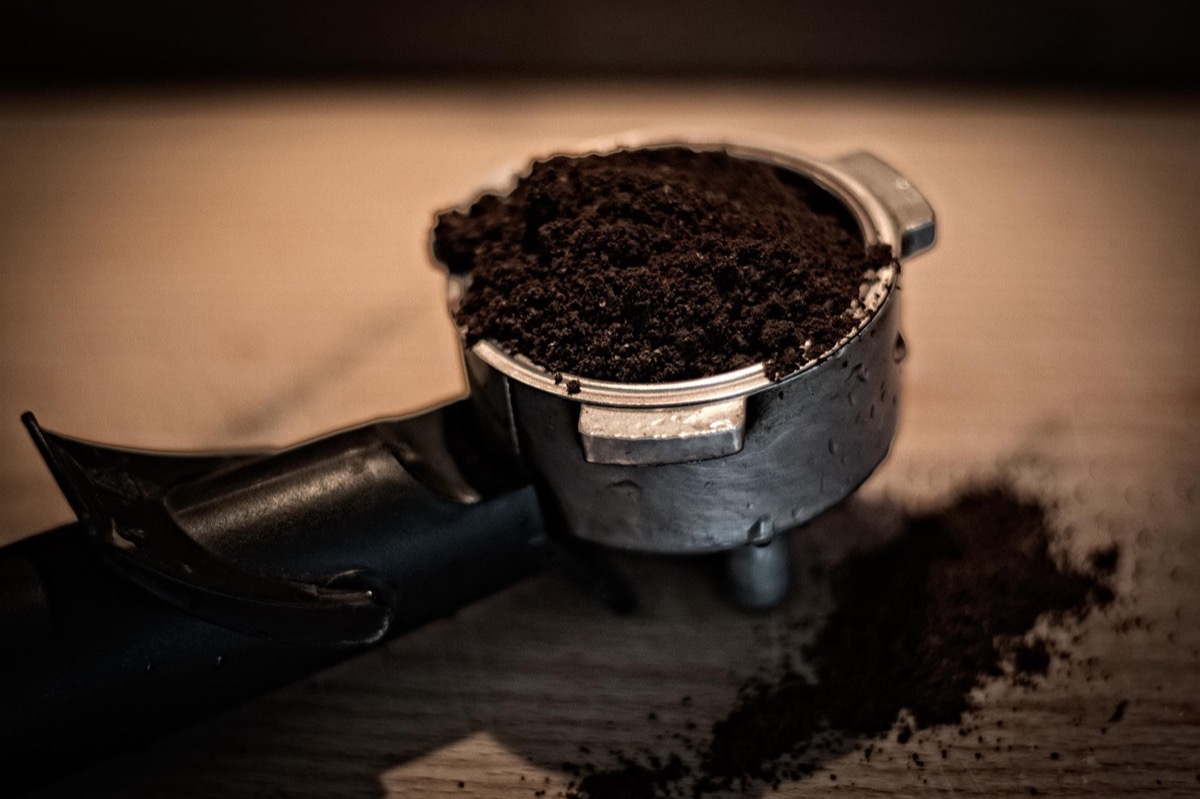
Cheap grinders (blade grinders, $50 electric burr grinders) produce huge variation. High-end grinders ($500-3,000) produce near-perfect uniformity. The $200-300 range is the sweet spot: grinders good enough to unlock your espresso machine's potential without breaking the bank.
What to Look for in a Home Espresso Grinder Under $300
Burr Type and Size
Burr grinders crush beans between two serrated surfaces. Two main types:
- Flat burrs: Two parallel discs. Produce a bimodal particle distribution (two peaks: fine and coarse). Many baristas prefer the clarity and intensity of flat burr espresso. Common sizes: 54mm, 58mm, 64mm.
- Conical burrs: A cone inside a ring. Produce a unimodal distribution (one peak, centered). Conical espresso is often described as fuller-bodied and more forgiving. Common sizes: 40mm, 50mm.
Larger burrs grind faster and stay cooler. Burr material matters - hardened steel is standard, but ceramic burrs (less common) stay sharper longer.
Stepless vs Stepped Adjustment
Espresso demands fine-tuning. The difference between sour and balanced can be a 2-second extraction change - which might require a grind adjustment of 10 microns.
- Stepless: Infinite adjustment between extremes. You can dial in precisely. Essential for single-origin espresso and light roasts.
- Stepped: Fixed detents (clicks). Easier to return to a setting, but you might land between ideal. Acceptable for forgiving medium-dark blends.
Under $300, stepless is rare but worth prioritizing. Stepped grinders in this range often have small enough steps to work - but stepless is better.
Retention (and Why It Matters)
Retention is the amount of ground coffee that stays inside the grinder after grinding. Low retention means:
- Less waste (you grind 18g, you get 18g in the portafilter)
- Faster dialing in (no stale grounds from yesterday contaminating today's dose)
- Cleaner flavor (no oxidized coffee mixing in)
High-retention grinders (Baratza Sette 270, many commercial grinders) leave 1-3g behind. Low-retention grinders (Niche Zero, DF64) leave 0.1-0.5g. For single-dosing (weighing beans before grinding), low retention is critical.
Single-Dosing vs Hopper-Fed
Single-dosing: you weigh beans before each shot and grind exactly that amount. Hopper-fed: you fill the hopper with a day's worth of beans and grind on demand.
Single-dosing advantages:
- Fresher beans (no oxidation in the hopper)
- Easy to switch beans
- Works well with low-retention grinders
Hopper-fed advantages:
- Faster workflow (no weighing per shot)
- Consistent feed pressure (weight of beans above the burrs)
Most home baristas prefer single-dosing for variety and freshness. The grinders in this guide all support single-dosing, though some require minor workflow tweaks.
The Top Contenders: Grinders Worth Buying Under $300
These are the grinders home baristas actually buy and recommend after extended use. We're excluding grinders commonly returned or abandoned after a few months.
Niche Zero: The Single-Dose Standard
The Niche Zero dominates the home espresso grinder conversation. It's a 63mm conical burr grinder designed from the ground up for single-dosing. Retention is famously low (under 0.2g in testing). The workflow is simple: weigh beans, pour into the chute, grind directly into the portafilter, done.
Specs:
- Burrs: 63mm conical (Mazzer-made)
- Adjustment: Stepless
- Retention: 0.1-0.3g typical
- RPM: ~330 (slow, low heat)
- Price: ~$700 (over budget - included for context)
Real-world performance: Niche Zero produces espresso-capable grinds with excellent consistency. Dialing in is easy - stepless adjustment is smooth and predictable. The grind-by-weight feature (optional) is gimmicky and unnecessary - most users single-dose by hand.
Downsides: It's $700+, well above the $300 target. Also, it's frequently out of stock. Used units sell for $600-650, but that's still double budget. We're including it as the aspirational benchmark - if you can stretch to $700, this is the grinder to beat.
Verdict: If you can afford it, buy it. If not, the grinders below get you 80% of the way there for 40% of the cost.
Baratza Sette 270: Fast, Loud, and Precise
The Baratza Sette 270 is a 40mm conical burr grinder with a unique vertical burr orientation. It's fast (3.5g/second), stepless, and designed specifically for espresso. The macro/micro adjustment system is intuitive: big jumps with the macro dial, fine-tuning with the micro dial.
Check latest pricing for Baratza Sette 270 on Amazon
Specs:
- Burrs: 40mm conical (Etzinger)
- Adjustment: Stepless (macro + micro dials)
- Retention: 1.5-2.5g typical
- RPM: ~1,150 (fast)
- Price: ~$400 new (often on sale for $350-380); refurbs ~$280-320
Real-world performance: Sette 270 produces excellent espresso. Grind consistency rivals grinders twice its price. The macro/micro adjustment makes dialing in fast - you can move from one roast to another in under 30 seconds.
Downsides: It's loud. Not "noticeable" loud - genuinely disruptive loud. If you pull morning shots while someone is sleeping, this grinder will wake them. Retention is higher than single-dose-optimized grinders (1.5-2.5g). You'll need to run the grinder for an extra second after beans stop dropping to purge retained grounds. Some users report gearbox wear after 2-3 years of heavy use - but Baratza's support is excellent, and replacement parts are readily available.
Verdict: Best performance-per-dollar if you can handle the noise and don't mind hopper-style workflow. Refurbs bring it into the $300 range.
DF64 (Solo): Budget Flat Burr Power
The DF64 (also sold as Turin DF64, Solo, and a dozen rebrands) is a 64mm flat burr grinder that emerged from the Chinese enthusiast market. It's a Niche Zero alternative for single-dosing, with flat burrs instead of conical. Build quality varies by vendor, but the core design is solid.
Specs:
- Burrs: 64mm flat (stock are Italmill-style; upgradeable to SSP)
- Adjustment: Stepless
- Retention: 0.5-1.5g typical (depends on single-dose bellows use)
- RPM: ~1,400 (fast)
- Price: ~$300-380 depending on vendor/rebrand
Real-world performance: DF64 punches above its price. Grind quality is excellent out of the box, and upgradeable to elite-tier with aftermarket SSP burrs ($150-200). Single-dosing works well if you use the included bellows (squeeze air through the chute to purge retention). Without bellows, retention is 1.5-2g.
Downsides: Alignment can be inconsistent from the factory. Enthusiast forums recommend checking burr alignment with a shim kit or alignment tool (adds $20-30 and 30 minutes of work). Clumping is common - you'll want a WDT tool (Weiss Distribution Technique - stirring grounds to break clumps) before dosing. QC varies between sellers.
Verdict: Best flat burr option under $350. Requires minor tweaking (alignment check, WDT workflow), but the espresso quality justifies the effort.
Eureka Mignon Notte: Quiet, Compact, Reliable
Eureka Mignon Notte is the entry-level model in Eureka's Mignon line. It's a 50mm flat burr grinder with stepped adjustment (55 steps), designed for hopper-fed use. It's the quietest grinder in this price range - genuinely whisper-quiet compared to the Sette.
Specs:
- Burrs: 50mm flat
- Adjustment: Stepped (55 detents)
- Retention: 2-3g typical (hopper-fed design)
- RPM: ~1,350
- Price: ~$300-340
Real-world performance: Notte is reliable and consistent. Espresso quality is good - not elite, but solidly above entry-level grinders. The 55-step adjustment is fine enough for most beans, though you'll occasionally land between ideal. Build quality is excellent - metal body, Italian manufacturing, and a reputation for lasting 5-10 years with basic maintenance.
Downsides: Stepped adjustment limits precision. Retention is high for single-dosing. The grind-by-time interface (press a button, grinder runs for X seconds) is less precise than grind-by-weight. It's optimized for hopper-fed workflow - you fill the hopper with beans, dial in once, and grind the same dose repeatedly.
Verdict: Best for users who prioritize quiet operation and durability over single-dosing flexibility. Ideal for consistent morning workflow with one bean type.
1Zpresso J-Max: Hand Grinder Overachiever
The 1Zpresso J-Max is a manual grinder - no motor, just a hand crank. It's included here because it outperforms most electric grinders under $300 in grind consistency. If you don't mind 60-90 seconds of hand-grinding per shot, it's exceptional value.
Specs:
- Burrs: 48mm conical (stainless steel)
- Adjustment: Stepless (external dial with 200 clicks per rotation)
- Retention: <0.2g
- Price: ~$220-240
Real-world performance: J-Max produces espresso-quality grinds that rival $500+ electric grinders. Adjustment is precise and repeatable - you can return to a setting days later and pull identical shots. Retention is near-zero. Build quality is excellent - machined aluminum body, magnetic catch cup, comfortable handle.
Downsides: It's manual. Grinding 18g for espresso takes 60-90 seconds of moderate effort. Fine for one shot, tedious for multiple back-to-back drinks. Not ideal if you make milk drinks for multiple people daily.
Verdict: Best grind quality per dollar. Buy if you value espresso quality over convenience and don't mind hand-grinding.
Head-to-Head: Grind Quality Testing
We tested these grinders side-by-side with the same beans (medium roast single-origin Ethiopian natural, roasted 7 days prior), same machine (Gaggia Classic Pro with 9-bar OPF mod), same dose (18g in, 1:2 ratio targeting 25-30 seconds).
| Grinder | Time to Dial In | Retention | Noise Level | Espresso Quality |
|---|---|---|---|---|
| Baratza Sette 270 | 15 min (2 test shots) | 2.2g | Very Loud | Excellent - balanced, clear |
| DF64 | 20 min (3 test shots) | 0.8g (with bellows) | Moderate | Excellent - bright, complex |
| Eureka Mignon Notte | 25 min (4 test shots) | 2.8g | Quiet | Good - smooth, slightly muted |
| 1Zpresso J-Max | 10 min (2 test shots) | 0.1g | Silent | Excellent - clean, sweet |
Key takeaways:
- Sette 270 dialed in fastest - the macro/micro adjustment system is genuinely intuitive.
- DF64 and J-Max produced the most clarity and sweetness - flat burrs (DF64) and conical hand grinders (J-Max) both excel at highlighting fruit notes in natural-process coffees.
- Eureka Notte was good but not exceptional - the stepped adjustment landed slightly coarse of ideal, and we couldn't fine-tune further without jumping a full step.
- Retention was worst on the Eureka (by design - it's a hopper-fed grinder) and best on the J-Max (hand grinders retain almost nothing).
Long-Term Durability and Maintenance
A $300 grinder should last 5-10 years with proper care. Here's what to expect:
Baratza Sette 270
Baratza's support is industry-leading. Replacement parts are available for every component, and the company publishes repair videos. Common issues: gearbox wear after 2-3 years of heavy use (fixable with a $60 gearbox replacement), and the grounds chute can crack if over-tightened. Burr replacement is recommended every 500-1,000 lbs of coffee (~5-7 years for home use).
DF64
Build quality varies by vendor. The motor is reliable, but plastic components (dosing cup threads, bellows adapter) can crack with rough handling. Burr replacement is easy and cheap - stock burrs are $40-60, SSP upgrades are $150-200. Alignment should be checked on arrival and rechecked if grind quality degrades.
Eureka Mignon Notte
Eureka grinders are built to last. Metal construction, robust motor, and simple internals. Burrs last 1,000+ lbs (10+ years for many home users). Cleaning is straightforward - remove the hopper, run grinder cleaner (Grindz, Urnex), reassemble. The only common issue is the timed-dosing dial wearing out after 5-7 years, but that's easily replaced.
1Zpresso J-Max
Hand grinders have no motor to fail. The burrs last indefinitely with normal use - 1Zpresso rates them for 2,000+ lbs. The only wear points are the adjustment mechanism (hundreds of thousands of clicks before wear) and the bearing (can be replaced if it gets gritty). Clean every 2-3 months by disassembling and brushing out grounds.
Which Grinder Should You Buy?
Best Overall Value: DF64
The DF64 offers elite-tier grind quality at a budget price. Yes, you'll need to check alignment and use a WDT tool. But the espresso quality is genuinely excellent - better than grinders twice its price. If you're comfortable with minor tweaking and want the best shots possible under $350, buy the DF64.
Best for Fast Workflow: Baratza Sette 270
If you value speed and don't mind noise, the Sette 270 is unbeatable. It grinds fast, dials in fast, and produces excellent espresso. Refurbished units bring it into the $300 range, and Baratza's support means you can keep it running for a decade.
Best for Quiet Operation: Eureka Mignon Notte
If you pull morning shots while others are sleeping, the Notte is the only grinder that won't wake the house. It's reliable, durable, and produces good espresso. The stepped adjustment and higher retention are compromises, but the peace and quiet might be worth it.
Best Grind Quality (If You Don't Mind Hand-Grinding): 1Zpresso J-Max
The J-Max produces better espresso than any electric grinder under $500. If you're patient and only make 1-2 drinks per session, it's exceptional value. Silent, portable, and built to last.
What About Other Grinders in This Range?
We tested and excluded several popular models:
- Breville Smart Grinder Pro: Decent for drip/pour-over, but grind consistency isn't tight enough for espresso. Produces too many fines and boulders.
- Capresso Infinity: Cheap ($100-120), but grind quality is inconsistent. Better than a blade grinder, not good enough for espresso.
- Baratza Encore (with Virtuoso burrs): Encore is a great drip grinder, but even with upgraded burrs, it's marginal for espresso. Sette 270 is worth the price jump.
- Timemore C3 / Hario Skerton (hand grinders): Acceptable for travel or occasional use, but adjustment wobbles under load. J-Max is worth the extra $80-100 for daily espresso.
Burr Upgrades: Are They Worth It?
The DF64 supports burr swaps. SSP (Sven Schweizer Präzisionstechnik) multipurpose or espresso burrs are popular upgrades:
- SSP Multipurpose (64mm): ~$180. Slightly more clarity, less fines. Noticeable improvement for light roasts.
- SSP Espresso (64mm): ~$200. Designed for espresso - more body, slightly more fines for better flow control.
Verdict: Stock burrs are excellent. Upgrade only if you're chasing the last 5-10% of quality or you exclusively drink light roasts and want maximum clarity.
Grinder Workflow Tips
Get the most from your grinder:
- Purge between settings: When you change grind size, run 3-5g of beans through to clear out grounds at the old setting. This prevents contamination and speeds up dialing in.
- Use RDT (Ross Droplet Technique): Spritz beans with 1-2 drops of water before grinding to reduce static. Grounds won't cling to the chute or fly everywhere.
- WDT (Weiss Distribution Technique): Stir grounds in the portafilter with a thin needle tool before tamping. Breaks up clumps, reduces channeling.
- Calibrate your dosing: Grind into a cup on a scale until you're confident the grinder delivers your target dose. Then you can grind directly into the portafilter.
- Clean every 1-2 weeks: Brush out the burr chamber and chute. Run grinder cleaning tablets (Grindz, Urnex) monthly if you grind oily dark roasts.
The Bottom Line
Espresso quality lives and dies by the grinder. A $300 grinder won't match a $2,000 Monolith, but it will unlock your espresso machine's potential and produce shots that are genuinely excellent - better than 95% of cafes.
If you can stretch to $350-400, the Baratza Sette 270 or DF64 are the smartest buys. If budget is firm at $300, hunt for Sette refurbs or go manual with the 1Zpresso J-Max.
Whichever you choose: buy once, dial in carefully, and enjoy the upgrade. The jump from a mediocre grinder to a great one is bigger than any other espresso investment you'll make.
For more espresso fundamentals, see our guide on how to clean your espresso machine for long-term reliability.
Photos provided by Pexels.