Coffee Bean Storage: How to Keep Espresso Beans Fresh Longer
Affiliate Disclosure: EspressoSnob participates in the Amazon Services LLC Associates Program. We earn commissions from qualifying purchases through our Amazon links at no extra cost to you. We recommend products based on specifications, performance, and value, not commission rates.
Quick Picks: Storage Containers That Actually Keep Beans Fresh
| Container | Type | Best For | |
|---|---|---|---|
| Airscape Stainless Canister | Press-to-seal, opaque steel | Daily-use countertop storage | Check Price on Amazon |
| Fellow Atmos Vacuum Canister | Twist-seal vacuum, opaque | Maximum oxygen protection | Check Price on Amazon |
| FoodSaver Vacuum Bag Kit | Vacuum-seal bags | Freezer portioning of bulk beans | Check Price on Amazon |
Coffee bean storage is the variable everyone gets wrong at first. You spend $80 on a precision grinder, dial in extraction to the second, and then store your $18-per-bag beans in a clear glass jar on the counter next to the espresso machine. Two weeks later, shots taste flat and you blame the beans.
The beans aren't the problem. The storage is. Coffee beans are botanicals, not shelf-stable goods. They oxidize in air, degrade under light, absorb moisture, and lose aromatic compounds to heat. Proper storage doesn't make bad beans good, but improper storage makes good beans bad within days.
This guide covers how coffee beans degrade, what container and location choices actually matter, the freezer storage debate (with the correct technique if you use it), portion control strategies, and the common storage mistakes that ruin even premium beans.
How Coffee Beans Degrade
Coffee beans are hygroscopic (they absorb moisture from air) and full of volatile aromatic compounds that evaporate or oxidize when exposed to oxygen, light, heat, or humidity. Degradation starts the moment beans leave the roaster and accelerates once you open the bag.
The Four Enemies of Fresh Coffee
- Oxygen: Oxidizes coffee oils and aromatic compounds. Even in an unopened bag, trace oxygen slowly degrades flavor. Once opened, oxidation accelerates. A half-empty bag of beans exposed to air for 7 days loses 30-40% of its aromatic intensity compared to vacuum-sealed beans.
- Light: UV light breaks down organic compounds in coffee beans, particularly the oils that carry flavor. Clear glass containers on sunny countertops accelerate staling 3-5x faster than opaque containers in dark cabinets. Even indirect indoor light damages beans over time.
- Heat: Accelerates all chemical reactions, including oxidation. Beans stored above 75°F lose flavor noticeably faster than beans stored at 60-70°F. Beans stored on top of the espresso machine (which radiates heat) or near the stove degrade within days.
- Moisture: Coffee beans absorb humidity from air, which dilutes flavor and promotes mold growth in extreme cases. Beans stored in humid kitchens (steam from dishwashers, boiling pots) or refrigerators (high humidity, condensation risk) lose flavor and develop off-notes.
Degassing vs Going Stale
Fresh-roasted beans release CO₂ for 5-10 days after roasting (degassing). This is normal and necessary. Beans pulled within 3-5 days of roasting taste grassy, sour, or underdeveloped because CO₂ interferes with extraction. Most specialty roasters let beans rest 3-7 days before shipping, so you receive them in the early degassing phase.
Degassing is not the same as going stale. Degassing is CO₂ release (beneficial, allows flavor to stabilize). Going stale is oxidation and volatile compound loss (harmful, flavor degrades). The peak flavor window opens around day 7 post-roast (after most degassing) and closes around day 21-28 (before significant oxidation).
You can't stop degassing, and you shouldn't try. You can slow oxidation with proper storage.
The Flavor Degradation Timeline
Days 0-3 post-roast: Beans actively degas. Flavor is sharp, acidic, underdeveloped. Not ideal for espresso yet.
Days 7-14 post-roast: Peak flavor window opens. Degassing slows, aromatic compounds stabilize, sweetness and complexity peak. Best espresso happens here.
Days 14-21 post-roast: Still excellent if stored properly. Minor aromatic loss, but most drinkers won't notice the difference from day 10.
Days 21-35 post-roast: Noticeable flavor decline. Brightness fades, body thins, origin character blurs. Still drinkable, but not peak.
Beyond 35 days post-roast: Stale. Flat, cardboard, dull. Aromatic volatiles are mostly gone. Even perfect storage can't rescue beans at this point.
The practical takeaway: Buy beans you'll consume within 3-4 weeks of roasting. If you buy in bulk, freeze portions immediately and only thaw what you'll use within a week.
Choosing the Right Storage Container
The container decision matters more than most home baristas realize. A good container blocks light, seals out air, and fits your consumption rate. A bad container turns $20 beans into compost.
Opaque vs Clear Containers
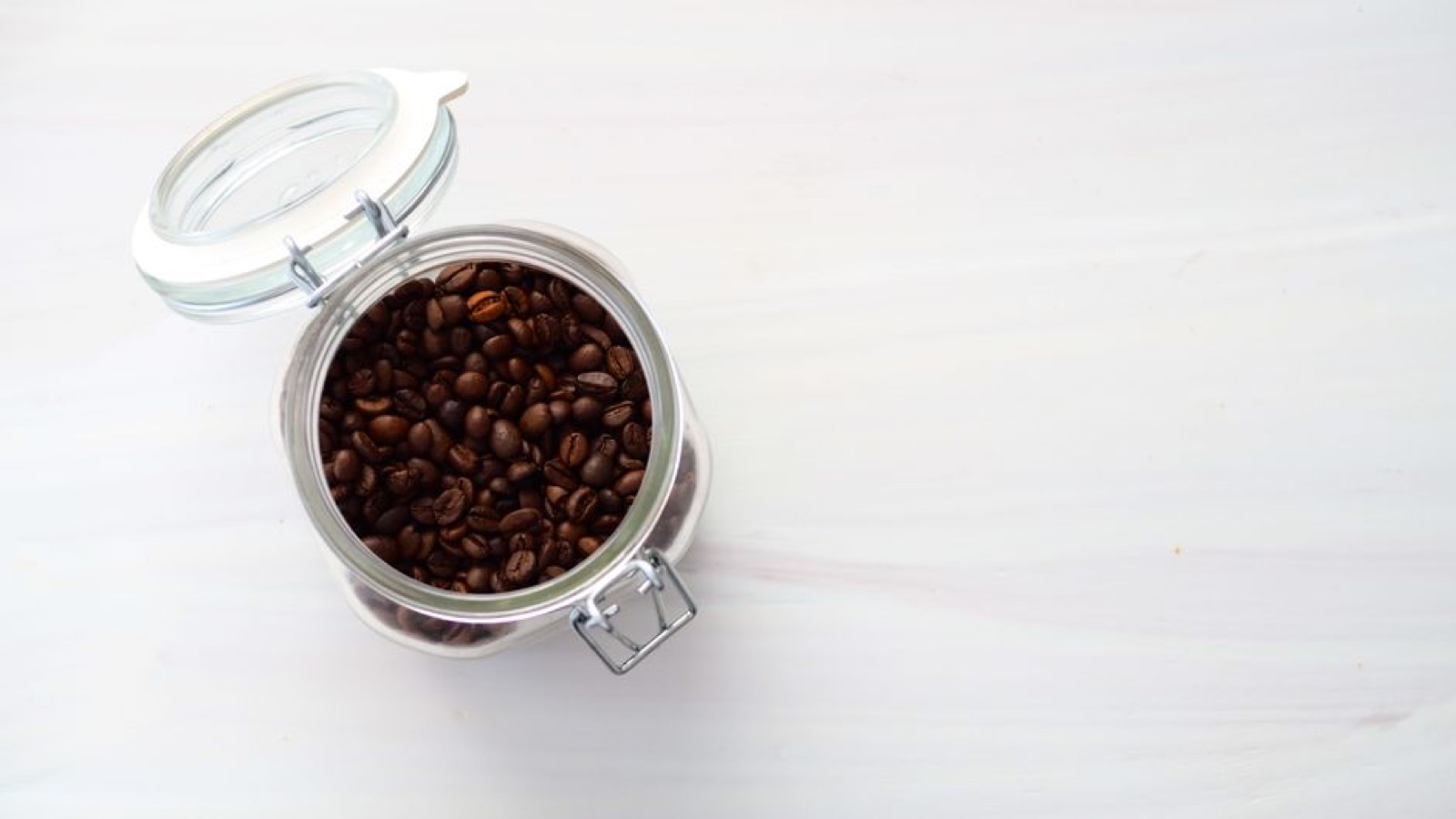
Use opaque containers. Clear glass looks nice on the counter and lets you see how many beans are left, but it exposes beans to light every moment they sit there. UV light degrades coffee oils, breaks down aromatic compounds, and accelerates oxidation.
Even indirect indoor light causes measurable flavor loss over 7-14 days. If you must use clear glass, store the container in a dark cabinet, not on the counter.
Best materials:
- Ceramic: Opaque, blocks all light, non-reactive, aesthetically clean. Downside: heavy, fragile, expensive.
- Stainless steel: Opaque, durable, non-reactive, lightweight. Downside: can dent, some lids don't seal perfectly.
- UV-blocking plastic: Opaque or tinted, lightweight, affordable, good seal options. Downside: cheaper plastics absorb odors over time, lower perceived quality.
Avoid:
- Clear glass (unless stored in a dark cabinet)
- Thin plastic bags (not airtight, tears easily, light exposure)
- Containers with loose-fitting lids (air leaks negate the point of a container)
Airtight Seals
Airtight means oxygen doesn't get in. Snap-on lids are not airtight. Screw-top lids with rubber gaskets are airtight. Clamp-top lids with silicone seals are airtight.
Test your seal: fill the container with beans, close it, and turn it upside down. If the lid stays secure and you don't hear air hissing, it's airtight enough. If the lid pops off or leaks, it's not airtight.
Why this matters: Oxygen is the primary enemy of fresh coffee. An imperfect seal lets oxygen creep in every day. Over a week, an unsealed container exposes beans to as much oxygen as leaving the bag wide open for hours.
One-Way CO₂ Valves
One-way valves let CO₂ escape without letting oxygen in. Roaster bags have these because fresh beans degas aggressively in the first week post-roast. If sealed in an airtight bag without a valve, CO₂ pressure would make the bag explode.
Do you need a valve on your storage container? Only if you're storing beans within 3-7 days of roasting. Most home baristas receive beans 7-14 days post-roast (after shipping time), so the aggressive degassing phase is over. An airtight container without a valve works fine.
If you do buy ultra-fresh beans (directly from a local roaster, same-day roasting), a valve helps during the first week. After that, the valve becomes irrelevant.
Marketing vs reality: Some container brands market CO₂ valves as essential for all storage. They're not. They're useful for the first 3-7 days post-roast. Beyond that, an airtight seal matters more than a valve.
Container Size
Size your container to your consumption rate. A 1-pound container is ideal for someone who buys 12oz bags and uses them within 2 weeks. A 5-pound container is overkill for a 12oz bag - the extra air space inside the container accelerates oxidation.
Why air space matters: A half-full container has twice as much oxygen exposure as a nearly-full container. If you store 8oz of beans in a 2-pound container, the top half of the container is filled with oxygen, which continuously oxidizes the beans.
Solution: Buy containers sized to your typical bean purchase (12oz, 1lb, 2lb). If you buy in bulk and freeze portions, use smaller containers for daily use and vacuum-sealed bags for frozen portions.
Storage Location and Environment
Where you store beans matters as much as what you store them in. The right container in the wrong location still results in stale beans.
Counter Storage
Acceptable if: The counter location is cool (below 70°F), dry (not near sink or dishwasher), and away from direct sunlight. An opaque container on a shaded counter in a climate-controlled kitchen works fine for beans you'll use within 2-3 weeks.
Not acceptable if: The counter is near the espresso machine (which radiates heat), near the stove (heat and humidity), in direct sunlight from a window, or in a humid kitchen (near dishwasher steam, boiling pots).
Counter storage is convenient (beans are always within reach), but it requires discipline about location. If your counter is warm or sunny, move the beans to a cabinet.
Pantry or Cabinet Storage
Ideal for most home baristas. A dark, cool, dry cabinet away from heat sources preserves beans better than any counter location. Beans stored in a cabinet at 65-70°F in an airtight container stay fresh for their full 3-4 week lifespan.
Best practices:
- Store on a shelf away from the back wall (which may be warmer if it backs onto a water heater or exterior wall in summer).
- Keep the container closed except when scooping beans.
- Avoid cabinets above the stove or refrigerator (heat rises and collects there).
Refrigerator Storage
Do not store beans in the refrigerator. This is a common mistake driven by the intuition that "cold = fresh." For coffee, it's the opposite.
Why refrigerators ruin beans:
- Humidity: Refrigerators are humid (40-60% relative humidity or higher). Coffee beans absorb that moisture, which dilutes oils and creates off-flavors.
- Condensation: Every time you take beans out of the fridge, condensation forms on the cold beans as they hit room-temperature air. That moisture gets absorbed instantly, ruining the beans.
- Odor absorption: Coffee beans are porous and absorb odors. Your beans will taste like onions, garlic, leftovers, or whatever else is in the fridge.
The refrigerator is not cold enough to slow oxidation significantly (it's 35-40°F, not freezing), and the humidity + condensation risks make it the worst possible storage location.
Freezer Storage
Freezer storage is controversial, but it works when done correctly. The key word is correctly. Most people freeze beans wrong and blame the freezer when the beans taste bad.
We'll cover the full freezer method in the next section.
Temperature Stability
Stable, cool temperatures slow oxidation. Fluctuating temperatures accelerate it. A cabinet that's 68°F every day preserves beans better than a cabinet that swings between 65°F and 78°F daily (near a window, heat vent, or exterior wall).
Ideal storage temperature: 60-70°F, consistent day-to-day.
Avoid: Locations that get hot during the day (sunny cabinets, above appliances), locations near heat vents, locations near exterior walls in extreme climates (cold in winter, hot in summer).
The Freezer Storage Method (When and How)
Freezing coffee beans extends their usable lifespan from 3-4 weeks to 3-6 months, but only if you follow the correct procedure. Improper freezing ruins beans faster than leaving them on the counter.
When Freezer Storage Makes Sense
- Bulk buying: You bought 5 pounds of beans at a discount and won't use them within a month.
- Seasonal availability: You found a limited-release bean you love and want to preserve it for months.
- Low consumption rate: You only pull shots on weekends and a 12oz bag lasts you 6+ weeks.
- Multiple bean rotation: You keep 4-5 different origins on hand and rotate through them slowly.
When freezer storage does NOT make sense:
- You'll use the beans within 3-4 weeks (counter or cabinet storage is simpler and works fine).
- You don't have a vacuum sealer or can't portion beans properly (improper freezing is worse than not freezing).
- Your freezer isn't frost-free or has temperature fluctuations (freezer burn and ice crystal formation ruin beans).
How to Freeze Coffee Beans Correctly
Step 1: Portion the beans. Divide the full batch into one-week portions (roughly 12-16oz per portion, depending on your consumption rate). Never freeze the entire batch as one block - you'll have to thaw and refreeze repeatedly, which destroys the beans.
Step 2: Vacuum seal each portion. Use a vacuum sealer to remove all air from each portion bag. If you don't have a vacuum sealer, use freezer-grade zip-lock bags and press out as much air as possible (less effective, but better than nothing).
Step 3: Freeze immediately. Don't wait. The moment beans are portioned and sealed, put them in the freezer. The longer they sit at room temperature in sealed bags, the more moisture they trap inside (from their own degassing and ambient humidity).
Step 4: Store in the back of the freezer. The back of the freezer has the most stable temperature. The door has the most temperature fluctuation (every time you open the freezer, door items warm up slightly). Temperature swings cause ice crystals to form on beans, which damages flavor.
How to Thaw Frozen Beans
This is where most people ruin their beans. Never open the bag while the beans are cold. Condensation forms instantly when cold beans hit room-temperature air, and that moisture gets absorbed into the beans immediately.
Correct thawing procedure:
- Take one sealed portion out of the freezer.
- Leave it sealed and let it sit at room temperature for 2-3 hours (overnight is fine too).
- Once the bag reaches room temperature, open it and transfer beans to your daily-use container.
- Never put beans back in the freezer after thawing. Once thawed, use them within 2-3 weeks.
Why this works: The sealed bag prevents condensation from forming on the beans as they warm up. Moisture condenses on the outside of the bag, not on the beans. Once the beans reach room temperature, you can safely open the bag without moisture risk.
Common Freezer Mistakes
- Opening the bag while beans are still cold: Instant condensation, instant flavor loss.
- Refreezing beans after thawing: Each freeze-thaw cycle damages cell structure and creates ice crystals inside the beans.
- Not vacuum sealing: Air in the bag allows freezer burn (oxidation at sub-zero temps, which creates off-flavors).
- Storing in the freezer door: Temperature fluctuations cause ice crystals to form and melt repeatedly, degrading beans.
- Freezing pre-ground coffee: Ground coffee has 10x more surface area than whole beans, so oxidation and moisture absorption happen faster. Never freeze ground coffee.
Freezer vs Counter: The Data
Properly frozen beans (vacuum sealed, stable freezer, correct thawing) retain 85-90% of their flavor for 3-4 months. Counter-stored beans (airtight container, cool dark cabinet) retain 85-90% of their flavor for 2-3 weeks, then drop to 60-70% by week 4.
If you're using beans within 3-4 weeks, skip the freezer. If you need beans to last 2+ months, freeze them correctly or don't bother - improper freezing is worse than aging on the counter.
Portion Control Strategy
Every time you open your container to scoop beans, you expose the entire batch to oxygen. Minimizing that exposure preserves freshness longer.
The Two-Container System
Use one large airtight container for bulk storage and one small container for daily use. Fill the daily container with 3-4 days' worth of beans (roughly 150-200g for someone pulling 2-3 shots per day). Refill it every 3-4 days.
Why this works: You only expose the bulk container to air every 3-4 days instead of multiple times per day. The daily container gets opened frequently, but it only holds a small quantity, so oxygen exposure per bean is minimized.
Example workflow:
- Buy a 12oz bag of beans, transfer to large airtight container (stored in cabinet).
- Scoop 180g into small daily container (next to espresso machine).
- Use daily container for 3-4 days.
- Refill from bulk container, repeat.
Pre-Portioning for Consistency
If you pull the same shot daily (18g in, 36g out), pre-portion beans into 18g doses in small glass jars or daily-dose containers. This eliminates the need to scoop from the bulk container every day.
Pros: Consistent dose every time, minimal air exposure to bulk storage, convenient morning workflow.
Cons: Time-intensive upfront (portioning 12oz into 18g doses takes 10-15 minutes), requires 15-20 small containers.
This method works for obsessive home baristas who value consistency over convenience. For most people, the two-container system is simpler.
Scoop Discipline
When scooping beans from your container:
- Open the lid, scoop quickly, close the lid. Don't leave the container open while you prep the grinder.
- Use a dedicated scoop (not your hands - skin oils transfer to beans).
- Don't shake or aerate the beans (agitation increases oxygen contact).
These are small optimizations, but they add up. A container left open for 2 minutes every morning (14 minutes per week) exposes beans to as much oxygen as leaving the lid off overnight once.
Common Storage Mistakes
Mistake 1: Storing in the Original Bag After Opening
Roaster bags are designed for shipping, not long-term storage. Once you break the seal, the bag is no longer airtight (even if you roll it and clip it). Air gets in every time you open it, and the bag doesn't block light unless it's foil-lined and stored in the dark.
Fix: Transfer beans to an airtight opaque container immediately after opening the bag.
Mistake 2: Clear Glass Jars on Sunny Counters
This is the Instagram-aesthetic storage method that ruins beans faster than almost anything else. Clear glass + sunlight = accelerated oxidation. Beans stored this way go stale in 7-10 days instead of 3-4 weeks.
Fix: Use opaque containers, or if you must use glass, store it in a dark cabinet.
Mistake 3: Refrigerator Storage
Covered in the earlier section, but worth repeating: refrigerators are humid, cause condensation, and make beans taste like the other food in the fridge. Never store beans in the refrigerator.
Fix: Dark cabinet or freezer (with correct technique) only.
Mistake 4: Buying Too Much at Once
A 5-pound bag seems like a good deal until you realize you can't drink 5 pounds of coffee in 3 weeks. By the time you reach the bottom of the bag, those beans are 6-8 weeks post-roast and stale.
Fix: Buy based on consumption rate. If you drink 60g per day, a 1-pound bag lasts 7-8 days. Buy weekly or every other week for peak freshness. If you do buy in bulk (for cost savings), freeze portions immediately using the method in section 5.
Mistake 5: Grinding Beans Before Storage
Ground coffee has 10-20 times more surface area than whole beans, which means oxidation happens 10-20 times faster. Beans ground today taste stale tomorrow. Beans ground a week ago taste like cardboard.
Fix: Grind immediately before brewing. Never pre-grind more than you'll use in the next 10 minutes. If you're buying pre-ground coffee for convenience, drink it within 3-5 days or accept that it will taste flat.
Mistake 6: Storing Near Heat Sources
Beans stored on top of the espresso machine (which runs 190-205°F internally and radiates heat), next to the stove, or in a sunny window degrade faster than beans stored in a cool cabinet. Heat accelerates oxidation.
Fix: Store beans in a cool, stable location away from appliances and sunlight. If your counter is warm, use a cabinet.
How Long Beans Stay Fresh
Freshness is a spectrum, not a binary. Beans don't go from fresh to stale overnight. They decline gradually, and your tolerance for that decline determines your usable window.
Peak Window: 7-21 Days Post-Roast
This is where espresso tastes best. Degassing is mostly complete (no more grassy or sour notes from trapped CO₂), aromatic compounds are stable, and oxidation hasn't noticeably degraded flavor. If you're chasing the absolute best shot your beans can produce, drink them in this window.
Usable Window: 3-5 Weeks Post-Roast
Noticeable flavor loss compared to peak, but still good coffee. Aromatic intensity drops 20-30%, sweetness fades slightly, body thins a bit. Most home baristas can't tell the difference between day 14 and day 28 without side-by-side comparison. This is the practical window for buying beans by the pound and using them at a normal pace.
Declining Window: 6-8 Weeks Post-Roast
Flat, dull, cardboard notes. Origin character is mostly gone. Shots taste generic, lacking brightness, sweetness, and complexity. Still drinkable (not rancid or moldy), but clearly past prime. If you're here, either finish the bag quickly or compost it and buy fresh.
Stale: Beyond 8 Weeks Post-Roast
Aromatic compounds are mostly gone. The shot tastes like old coffee, not like the specific bean you bought. No amount of dialing in or technique will rescue stale beans. Compost them and start fresh.
Signs Your Beans Are Past Prime
- Weak aroma: Fresh beans smell intense when you open the bag or container. Stale beans smell faint or flat.
- Lack of crema: Fresh beans produce thick, persistent crema. Stale beans produce thin, pale, short-lived crema (or none at all).
- Flat flavor: Shots lack brightness, sweetness, and complexity. They taste one-dimensional or like generic coffee.
- Fast extraction: Stale beans degas completely, so water flows through them faster. If you haven't changed grind size but shots suddenly run 5-10 seconds faster, the beans are stale.
If you notice these signs, check the roast date. If beans are over 5 weeks post-roast, staleness is the likely cause.
Practical Buying and Storage Workflow
Determine Your Consumption Rate
Track how much coffee you drink daily for a week. If you pull 2 shots per day at 18g per shot, you consume 252g per week (roughly 9oz). A 12oz bag lasts you 9-10 days.
Buying strategy based on consumption rate:
- High consumption (400g+ per week): Buy 1-pound bags weekly for peak freshness.
- Moderate consumption (200-400g per week): Buy 12oz bags every 7-10 days, or buy 1-pound bags every 2 weeks.
- Low consumption (under 200g per week): Buy 8oz bags or freeze portions from larger bags.
Subscription Timing vs Bulk Orders
Subscriptions: Ideal for consistent consumption. Set delivery frequency to match your consumption rate (weekly, bi-weekly). Most roasters ship beans 3-7 days post-roast, so you receive them at the start of the peak window.
Bulk orders: Good for cost savings if you freeze portions immediately. Buy 3-5 pounds, portion into 12oz vacuum-sealed bags, freeze, and thaw one portion at a time. This works only if you have a vacuum sealer and freezer space.
Storage Immediately After Receiving Beans
- Check the roast date on the bag. If beans are under 7 days post-roast, leave them in the original sealed bag for 3-5 more days (let degassing finish).
- If beans are 7+ days post-roast, transfer to your airtight storage container immediately.
- If you bought in bulk, portion and freeze excess immediately. Don't let beans sit at room temperature for days before freezing.
Rotation Strategy for Multiple Origins
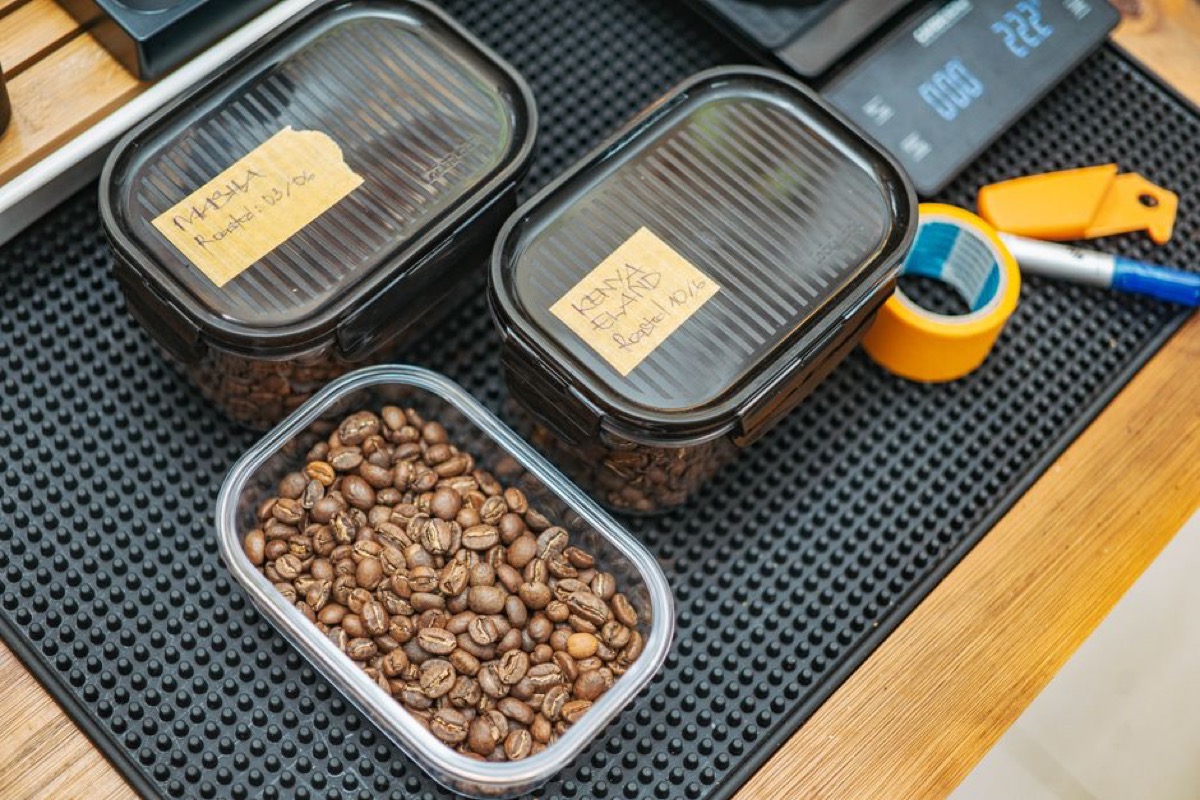
If you keep multiple bean origins on hand (light roast for weekends, medium roast for weekdays, decaf for evenings), label containers with roast date and origin. Use oldest beans first (FIFO - first in, first out).
Avoid the trap of buying new beans before finishing old ones. It's tempting to try the new origin immediately, but your older beans degrade while you do that. Finish what you have, then open the new bag.
Final Thoughts
Coffee bean storage is simple in principle (block oxygen, light, heat, moisture) but easy to get wrong in practice (clear jars, refrigerators, bulk bags left open). The effort required to store beans correctly is minimal - an opaque airtight container, a dark cabinet, and discipline about not buying more than you'll use in 3-4 weeks.
Proper storage doesn't make bad beans good. It preserves good beans so they taste as intended. If you're spending $18-25 per bag on specialty coffee, spending $20 on a proper storage container and following basic storage rules ensures you taste what the roaster intended, not what oxygen and light degraded it into.
Start with the basics: opaque container, airtight seal, cool dark location. If you buy in bulk or need beans to last months, add freezer storage with correct portioning and thawing technique. Avoid the common mistakes (clear glass, refrigerators, bulk buying without freezing), and your beans will taste fresh for their full 3-4 week lifespan.
Affiliate Disclosure: EspressoSnob participates in the Amazon Services LLC Associates Program, an affiliate advertising program designed to provide a means for sites to earn commissions by linking to Amazon.com. We earn commissions from qualifying purchases made through our Amazon links at no additional cost to you. These commissions support our research, testing, and content creation. We recommend products based on specifications, performance, and value, not commission rates.
Photos provided by Pexels.
Frequently Asked Questions
Should I store coffee beans in the freezer?
Freezer storage works for long-term bulk storage (3+ months) but requires proper technique. Portion beans into vacuum-sealed bags (one week portions), freeze immediately after roasting, and never refreeze after thawing. Take one portion out at a time, let it reach room temperature in the sealed bag (2-3 hours), then transfer to your daily container. Never open the bag while beans are cold - condensation forms instantly and ruins them. For beans you'll use within 3-4 weeks, counter storage in an airtight opaque container works better.
What type of container is best for coffee bean storage?
Opaque, airtight canister made of ceramic, stainless steel, or UV-blocking plastic preserve beans best. Avoid clear glass (light exposure accelerates staling), avoid containers with loose-fitting lids (oxygen exposure), and size the container to your consumption rate - a half-full container has more air exposure than a nearly-full one. One-way CO₂ valves help during the first week post-roast when beans actively degas, but aren't critical if you're buying beans 7-14 days after roasting (most specialty roasters' shipping window).
How long do coffee beans stay fresh after roasting?
Peak flavor window: 7-21 days post-roast (after initial degassing, before significant oxidation). Usable window: 3-5 weeks (noticeable flavor loss but still acceptable for most drinkers). Declining window: 6-8 weeks (flat, cardboard notes, loss of origin character). Beyond 8 weeks, even proper storage can't preserve quality - the beans are stale. Roast date matters more than packaging date or best-by date. Always check the roast date, not the packaging date.
Can I store coffee beans in the original bag?
Only if the bag has a resealable zip-lock closure and you store it inside an opaque outer container. Most roaster bags are foil-lined with one-way valves but aren't resealable after opening - once you break the seal, air gets in every time you scoop beans. Better solution: transfer beans to a dedicated airtight container immediately after opening. If you must use the original bag, roll it tightly, clip it shut, and store it in a dark cabinet or opaque canister to block light.
Why do my coffee beans taste stale even though they're only two weeks old?
Most likely causes: clear glass container in sunlight (light accelerates oxidation 3-5x faster than darkness), storage near heat source (espresso machine, oven, sunny windowsill), humid environment (moisture absorption ruins flavor), or a container that isn't truly airtight (loose lid, worn gasket). Check your storage location and container seal. Even properly stored beans lose 20-30% of aromatic volatiles in the first week after roasting, so what feels like staleness might be normal degassing if beans are under 7 days post-roast.
Is it better to buy whole beans in bulk or small batches?
Buy based on consumption rate. If you pull 2-3 shots daily (60g/day), a 12oz bag lasts about a week - buy weekly for peak freshness. If you consume less (weekend-only espresso), buy smaller quantities (8oz bags) or freeze portions immediately. Bulk buying (5+ pounds) makes sense only if you freeze portions immediately after roasting and consume within 6 months. Buying more than you'll use in 3-4 weeks guarantees you'll drink stale coffee at the end of the bag, no matter how good your storage method.