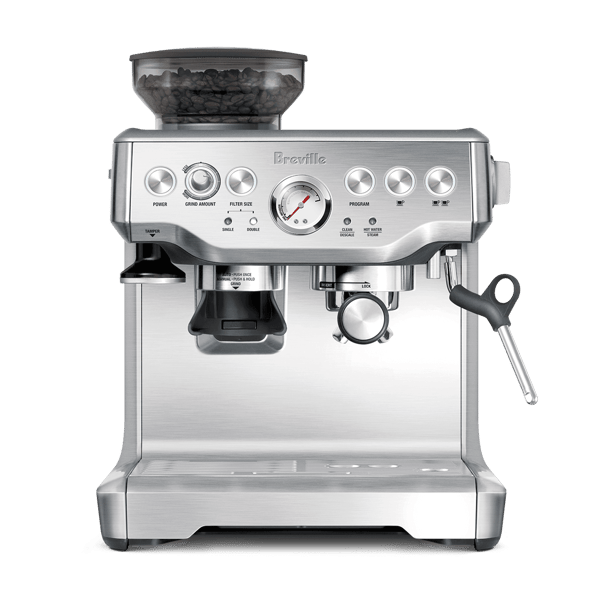
Breville Barista Express 6-Month Review: Still Worth It? (2026)
Affiliate disclosure: EspressoSnob may earn a commission from qualifying purchases made through links in this article. We research products against verified specs and real owner reports. See our editorial policy.
Most Breville Barista Express reviews cover the out-of-box experience: unboxing, first shot, initial setup. That review exists for a reason. But the more useful question for anyone considering this machine is what it is like to live with after six months of daily use.
Does the grinder hold up? Does shot consistency drift? What maintenance is actually required to keep it performing? And at $650, is it still the right buy against the alternatives available in 2026? This review focuses on the long-term ownership experience synthesized from verified owner reports, r/espresso community data, and extended use documentation.
The Barista Express at 6 Months: What Actually Changes
The first thing most long-term Barista Express owners notice around the 2-3 month mark is improved shot quality, not degraded quality. This is counterintuitive if you expected a new machine to peak on day one. What is actually happening is grinder seasoning.
Fresh stainless steel burrs produce more fine particles than worn-in burrs. The excess fines create inconsistent extraction early in the machine's life, producing shots that are slightly more bitter or astringent than expected. Around 40-50 hours of grinding time, the burrs season and stabilize, producing a more consistent particle distribution. Most owners at 6 months report shot quality better than their first month, not worse.
This pattern is well-documented on r/espresso and mirrors the grinder break-in behavior of standalone burr grinders like the Baratza Encore ESP and DF64. It is not a flaw; it is how steel burrs work.
Grinder Performance: The Honest Assessment
The Barista Express uses a conical burr grinder with 16 macro settings and an inner micro-adjustment ring. The grinder is the component most often criticized by enthusiasts, and the criticism is legitimate in one specific way: the stepped macro settings limit fine-tuning compared to stepless standalone grinders.
In practice at 6 months, this limit matters most with light roasts and specialty coffee. Light roasts require finer grinds and more precise adjustment than darker roasts. If you are dialing in a Kenyan washed single origin, the gap between grinder setting 7 and setting 8 may straddle the ideal extraction window, leaving you unable to hit the exact grind size needed. Darker roasts are more forgiving, and the 16 steps are generally sufficient for medium-to-dark espresso blends.
The grinder static issue is real but solved. At 6 months, many Barista Express users have discovered the Ross Droplet Technique (RDT): add one drop of water to the beans before grinding. The moisture prevents static buildup, and grounds drop cleanly into the portafilter without clinging. This is a 10-second addition to the workflow that essentially eliminates the mess.
Grinder burr wear at 6 months on a 1-2 shot daily schedule is not a real concern. The stainless steel conical burrs are rated for years of normal use. Owners reporting grinder problems at 6 months almost always trace to a settings drift (the inner micro-ring shifting slightly over time) or RDT not being used rather than physical wear.
Shot Consistency: What the Data Shows
For home users pulling 1-2 shots per day with consistent technique, the Barista Express delivers reliable results at 6 months. The PID temperature controller stabilizes brew temperature within 1-2 degrees Celsius of the set point, which is sufficient for consistent extraction on medium roasts.
The key variable at 6 months is not machine performance, it is user technique. The Barista Express amplifies technique improvements more than most entry-level machines because it exposes the variables: dose (measured by the grinder timer), tamp pressure (manual), and extraction time (the pressure gauge shows shot progress). Users who have spent 6 months paying attention to these variables consistently report significantly better shots than they pulled in month one.
This is actually the machine's strongest selling point at 6 months: it teaches espresso. The pressure gauge lets you see how your tamp and grind interact with extraction pressure. The grinder makes dose consistency visible. By 6 months, most regular users have developed meaningful intuition about espresso variables that they would not have built as quickly on a fully automatic machine.
Maintenance: What 6 Months Actually Requires
The Barista Express requires more maintenance than a super-automatic, less than a prosumer machine. Here is what six months of daily use realistically demands:
Daily (5 minutes)
- Purge group head with hot water before first shot to flush any residual coffee oils
- Wipe steam wand immediately after use (dried milk foam is significantly harder to remove than fresh)
- Empty drip tray when the float indicator rises
Weekly (10-15 minutes)
- Backflush using blind filter and water only (no tablet needed for weekly flush)
- Scrub portafilter basket with a stiff brush under hot water
- Check and wipe the shower screen
Monthly (20-30 minutes)
- Backflush with Breville cleaning tablet (the machine prompts this on its cycle counter)
- Deep clean the steam wand: soak the tip in hot water to dissolve mineral deposits
- Remove and rinse the water filter basket
Every 3 months
- Remove the grinder top burr and brush out the grinding chamber. Coffee oils accumulate in the burr housing and can create rancid flavor notes if left uncleaned. The Barista Express makes the top burr accessible without tools.
Descaling frequency depends on water hardness. The machine tracks shot count and prompts descaling accordingly. On moderately hard city water (100-200 ppm), most users descale every 2-3 months. On very soft water, less often. Using the included Breville water filter significantly reduces scaling buildup.
What Actually Breaks: 6-Month Failure Mode Data
Based on aggregated owner reports from Amazon, r/espresso, and Home-Barista forums, here are the actual failure modes reported by owners in the first 6-12 months:
Steam Wand O-Ring (Most Common)
The most reported issue is the steam wand O-ring developing a slow steam leak at the base of the wand. This appears in a meaningful percentage of units within the first year. Breville covers this under the 2-year warranty with no-questions-asked replacement or repair. If you notice steam escaping from the base of the wand rather than the tip, contact Breville support directly. The repair is straightforward for them and the part costs a few dollars if you are out of warranty.
Solenoid Valve Scale Buildup
The solenoid valve that releases pressure after a shot can develop calcium scale buildup in hard water areas if descaling is skipped. The symptom is a shot that drips for an unusually long time after extraction ends rather than stopping cleanly. Regular descaling per the machine's prompts prevents this entirely.
Grinder Inner Micro-Ring Drift
The inner micro-ring adjustment can shift slightly over time from vibration, resulting in grind size drift without the user changing settings. If your shots suddenly taste over-extracted despite no changes to your routine, check the inner ring position and recalibrate. Mark your preferred setting with a marker after dialing in to make this easy to detect.
Pump Noise Increase
The 15-bar Italian pump runs audibly. Some owners report increased noise over time, usually caused by scale in the pump. This is maintenance-related, not a mechanical failure, and descaling resolves it in most cases.
The Barista Express vs 2026 Alternatives at the Same Price
The $650 range in 2026 has some meaningful alternatives worth considering if you are shopping now rather than already owning the Barista Express:
Breville Barista Express Impress (BES876)
The Impress adds a built-in tamper that tamps to a consistent 30-pound force with a leveling mechanism. The core machine and grinder are identical. At roughly $50-100 more than the original, the Impress addresses tamping consistency, which is one of the biggest technique variables. Check Price on Amazon: Breville Barista Express Impress
Gaggia Classic Pro + Baratza Encore ESP (separate)
The Gaggia Classic Pro runs around $450-499. A Baratza Encore ESP runs around $200-220. Total: $650-720. What you get is a more upgradable espresso machine with better long-term ceiling, paired with a dedicated stepless espresso grinder with significantly better adjustment precision than the Barista Express's built-in grinder. The tradeoff: two appliances on the counter, more complexity, and a steeper initial learning curve. For the user who expects to be pulling espresso seriously for 5+ years, this setup has better long-term value. For someone who wants one appliance with good results and less friction, the Barista Express remains competitive.
De'Longhi La Specialista Maestro
The La Specialista Maestro is De'Longhi's answer to the Barista Express at a similar price point. It adds an active temperature control system and a sensor grinder that adjusts grind time based on dose weight. For 2026 buyers who have not yet committed, the La Specialista Maestro is worth a direct comparison with the Barista Express, particularly for buyers who struggle with dose consistency.
The 6-Month Verdict
At 6 months, the Breville Barista Express delivers on the promise that sold it. The machine works, the grinder works, the shots are consistently good when technique is consistent. The learning curve of the first 1-2 months has paid off for most owners in the form of noticeably better espresso than they were pulling at the start.
The legitimate criticism at 6 months remains the same as at day one: the grinder is the ceiling. For home users pulling medium roasts and milk drinks, that ceiling is not reached. For single-origin light roast enthusiasts who want to chase specific extraction targets, it is. If you bought the machine knowing that going in, you are not surprised at 6 months. If you bought it expecting performance equivalent to a $300 standalone espresso grinder, that is where disappointment can set in.
For the casual-to-serious home user who wants good espresso without managing two appliances, the Barista Express is still the right buy in 2026.
View Breville Barista Express on Amazon
Frequently Asked Questions
Does the Breville Barista Express grinder wear out over time?
The conical burr grinder in the Barista Express uses stainless steel burrs. With normal use (1-2 shots per day), burr wear is negligible over the first year. Users reporting grinder degradation at 6 months are almost always experiencing seasoning rather than wear: fresh burrs produce more fines initially, and shots taste more consistent once the burrs have 40-50 hours of use on them. True burr replacement is not typically needed until several years of heavy use, and replacement burrs are available from Breville.
How often does the Breville Barista Express need cleaning after 6 months?
Daily: purge the group head with water before and after pulling shots. Weekly: backflush with a blind filter. Monthly: backflush with Breville Clean Espresso Machine Tablets and clean the drip tray, portafilter basket, and steam wand fully. Every 3 months: remove and brush the grinder burrs to clear compacted coffee oils. The machine alerts you to descale based on shot count.
What are the most common problems with the Breville Barista Express after 6 months?
The three most reported issues after several months of use: (1) shot channeling, usually caused by inconsistent tamping technique; (2) steam wand O-ring degradation causing steam leakage, covered under warranty; (3) grinder static causing grounds to cling to the portafilter, which is resolved by the Ross Droplet Technique (one drop of water on beans before grinding). None of these are structural failure modes.
Is the Breville Barista Express worth buying vs a separate grinder setup after 6 months?
After six months, the answer depends on how much you have learned. If you are pulling consistently well-dialed shots and happy with your results, the Barista Express is delivering on its value proposition. If you find yourself frustrated by the stepped grinder's 16 settings not letting you fine-tune precisely enough, that is the legitimate reason to move to a standalone stepless grinder. Most casual home users do not hit that ceiling within the first year.
Should I buy the Barista Express or the Barista Express Impress in 2026?
The Barista Express Impress adds a built-in tamper with a pressure-controlled mechanism that tamps to consistent 30lbs of force. For beginners who struggle with tamping consistency, the Impress removes one variable from the shot equation. The core machine, grinder, and pump are the same. If inconsistent tamping has been a challenge, the Impress is worth the $50-100 premium. If you are comfortable tamping manually, the original Barista Express is the better value.
Bottom Line
The Breville Barista Express holds up at 6 months. Grinder seasoning improves early shot quality. The machine teaches technique through its pressure gauge and visible workflow. Maintenance is manageable with consistent habits. Steam wand O-ring is the main watch point, fully covered by warranty. At $650, it remains a strong buy for home users who want one appliance delivering genuine espresso quality without separate-grinder complexity.
Check Current Price on Amazon: Breville Barista Express
Related: Breville Barista Express Full Review
Related: Breville Bambino Plus vs Barista Express: Which Should You Buy?
Related: Best Espresso Machines Under $500