Nespresso vs Espresso Machine: Which Should You Buy in 2026?
The quick answer: Choose Nespresso for convenience and speed. Choose an espresso machine for control, depth of flavor, and lower per-cup costs. But there's much more nuance worth understanding before spending $200-500.
Affiliate Disclosure: EspressoSnob is reader-supported. When you buy through links on our site, we may earn a small commission at no extra cost to you. This never influences our recommendations.
Best For Speed
90 seconds to espresso, no skill needed, foolproof every time. Perfect if you value convenience above all else.
- Heat-Up Time 30 seconds
- Skill Required None
- Per-Cup Cost ~$0.85
- Time to Cup 90 seconds
Best For Control
Full control over every variable, better flavor depth, learn real barista skills. 50-cent per-cup costs.
- Learning Curve Months
- Control Full
- Per-Cup Cost ~$0.50
- Time to Cup 3-5 minutes
Best For Learners
Fast heat-up, some control, great stepping stone. Breville machines hit sweet spot of convenience plus real espresso.
- Heat-Up Time 3 seconds
- Learning Curve Moderate
- Control Good
- Price ~$400
Introduction: The Real Question You're Asking
You wake up craving espresso. You have two paths:
Path 1 (Nespresso): Insert a pod, press a button, drink within 90 seconds. No skill required. Every shot identical. Pod costs about $0.85. Machine ready to use at 30 seconds. No learning curve. No control.
Path 2 (Espresso Machine): Grind fresh beans, tamp to exact pressure, pull a shot, dial in variables. Takes 3-5 minutes first try, then 1-2 minutes once dialed. Bean cost about $0.50. Learning curve of months. Full control. Shots improve as you practice.
This isn't about which is "better." It's about what you value more: time-to-cup and foolproof consistency (Nespresso) versus flavor control and cost efficiency (real espresso). The real answer depends on YOUR priorities, not marketing claims.
Most coffee enthusiasts who start with Nespresso eventually graduate to real espresso machines once they want more from their coffee. But if convenience is your absolute top priority and budget allows the high per-cup costs, Nespresso is legitimately good. The key is being honest about what you're getting - which means understanding what you're NOT getting.
What is Nespresso and How It Works
Nespresso is a closed-system pod-based espresso alternative made by Nestle. You buy sealed aluminum capsules filled with pre-dosed, pre-roasted coffee. Insert pod, press button, espresso comes out. No grinder. No mess. No decisions.
The Nespresso Ecosystem
Nespresso makes two distinct lines: Original and Vertuo.
Original Line (True-ish Espresso)
Uses pump pressure (up to 19 bars) to force hot water through the capsule. This is the closest Nespresso gets to real espresso extraction. You get three drink sizes: ristretto (0.85 oz, concentrated), espresso (1.35 oz, standard), and lungo (3.7 oz, diluted). Each uses the same capsule - you just control how long water flows through. Original pods cost 80 cents to $1. Compatible pods from third-party brands exist and cost less. You can use cheaper generic pods if brand doesn't matter to you.
Vertuo Line (Not Real Espresso)
Uses centrifusion - spinning the sealed capsule at 7,000 RPM instead of using pump pressure. This creates centrifugal force that extracts coffee but also creates excessive aeration/foam. Vertuo claims this is "crema" but it's actually bubbles from the spinning action, not the result of proper espresso extraction. Vertuo pods are proprietary and more expensive ($0.95-$1.25). You cannot use generic pods. Vertuo makes 5 drink sizes depending on pod selection - espresso, ristretto, gran lungo, coffee, and large coffee.
Best Nespresso Machines to Consider
Nespresso Essenza Mini (Original Line)
The most compact and least expensive Nespresso. Makes pure espresso drinks (ristretto, espresso, lungo). No coffee function - espresso only. Heats up in 30 seconds. Foolproof operation: two buttons, that's it. Small water tank (20 oz) means refilling frequently. Small capsule container (holds 6 pods) means emptying often. But the espresso quality is excellent - balanced, not overly bitter like some Nespresso machines. Since 2018 this has been the Wirecutter pick for good reason.
- Line: Original (pump pressure)
- Heat-Up: 30 seconds
- Drink Types: Espresso only (3 sizes)
- Water Tank: 20.3 oz
- Pod Cost: ~$0.80 per capsule
- Price: ~$180-200
Nespresso Lattissima One (Original Line)
Original line with built-in milk frother. Makes espresso-based drinks (cappuccino, latte, macchiato) automatically. The frother adds $100+ to the price but saves time if you drink milk-based drinks daily. Larger than Essenza Mini. Water tank 33.8 oz. Good option if you want espresso PLUS easily-frothed milk drinks.
- Line: Original (pump pressure)
- Heat-Up: 30 seconds
- Milk Frother: Automatic (detachable)
- Water Tank: 33.8 oz
- Pod Cost: ~$0.80 per capsule
- Price: ~$280-320
Honest Assessment: Is Nespresso Real Espresso?
No - with important caveats. Nespresso Original machines use pump pressure similar to real espresso machines, so they're closer than most alternatives. But several things disqualify them:
- No grind control: You cannot adjust grind size. The pods are sealed and pre-dosed. You can't make your shot finer or coarser.
- No tamping: Real espresso requires precise tamping pressure. Nespresso is fully automated - you have zero control.
- No bean selection: You can only choose from Nespresso's available pods. No ability to experiment with single-origin beans, roast dates, or different roasters.
- Limited crema: Real espresso crema comes from proper extraction of fresh grounds. Nespresso crema is consistent but less complex than fresh-pulled espresso.
- Vertuo is definitely NOT espresso: Centrifusion is a different extraction method entirely - it's more like a fancy Keurig than espresso.
Verdict: Nespresso Original machines make espresso-like drinks using pump pressure. They're not "real espresso" in the barista sense, but they're legitimate espresso-style drinks. Acceptable? Yes. Best possible? No.
What is an Espresso Machine and How It Works
A real espresso machine forces hot water at high pressure (9 bars minimum) through freshly ground coffee that you've tamped to exact density. The water extracts flavor compounds from the grounds, and you pull a ~1.5-ounce shot in 25-30 seconds. The result is concentrated, rich coffee with natural crema (from proper extraction, not bubbles).
Key Components
Pump: Creates 9+ bars of pressure. Manual machines use a lever. Semi-automatic and automatic machines use an electric pump. Minimum 9 bars is non-negotiable for espresso.
Boiler/Thermoblock: Heats water to ~195-205 degrees F. Single boiler takes longer to heat but is more stable. Thermoblock heats faster but is less stable. Both work fine for home use.
Portafilter: The handle that holds the basket. Standard sizes are 54mm (smaller, cheaper) and 58mm (larger, commercial standard). Size affects water distribution and shot consistency.
Basket: Holds the grounds. Single basket (~7g), double basket (~18g), or pressurized (no control - for beginners). Most quality machines use non-pressurized baskets that force you to dial in properly.
Grinder: More important than the machine. A $400 machine with a $150 grinder will pull worse shots than a $300 machine with a $400 grinder. Grinder is where precision happens. You MUST have a quality burr grinder - any cheap blade grinder will ruin your shots.
The Learning Curve is Real
Day 1: You'll pull weak, watery shots or choked shots (too fine, too slow). You'll stare at timers. Nothing will taste like cafe espresso. You'll question your purchase.
Week 1: You're dialing in grind size, understanding tamping pressure, learning how long extraction takes. Some shots are drinkable. You're starting to see why this matters.
Month 1: You've dialed in your grinder. Shots are consistent and good. You're noticing subtle flavor differences between beans. The machine is becoming natural to use.
Month 3+: You pull excellent espresso regularly. You understand extraction, can diagnose problems, and can make adjustments. The learning paid off.
This matters: Nespresso eliminates the learning curve. Espresso machines require it. If you hate learning through iteration, Nespresso is better. If you enjoy mastery and improvement, espresso machines reward you.
Best Espresso Machines Under $500 to Consider
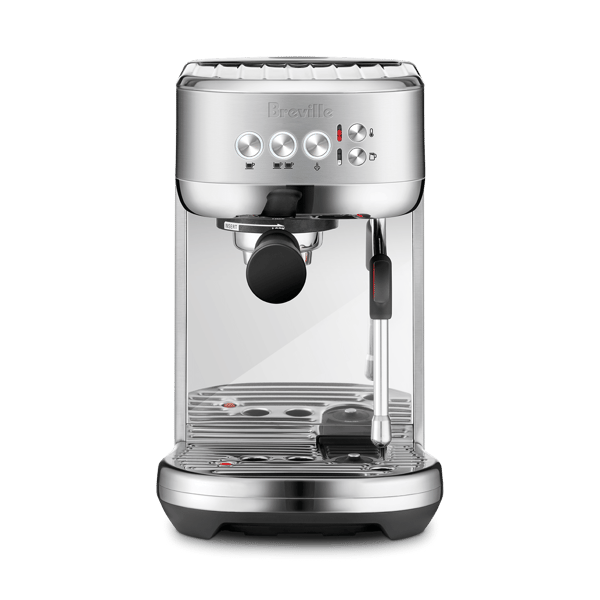
Breville Bambino Plus
Heats up in 3 seconds and ready to pull shots immediately. Single ThermoJet heating system, 9-bar pump (15-bar Italian pump), PID temperature control. 54mm portafilter. Automatic or manual steam modes. Compact design. This machine removes the "waiting for heat-up" frustration and lets you pull multiple shots without long waits. Perfect for impatient people who want espresso NOW but also want real machine control.
- Boiler Type: Dual Thermoblock
- Pressure: 9 bars
- Heat-Up: 3 seconds (fastest in class)
- Portafilter: 54mm
- Warranty: 2 years
- Price: ~$400
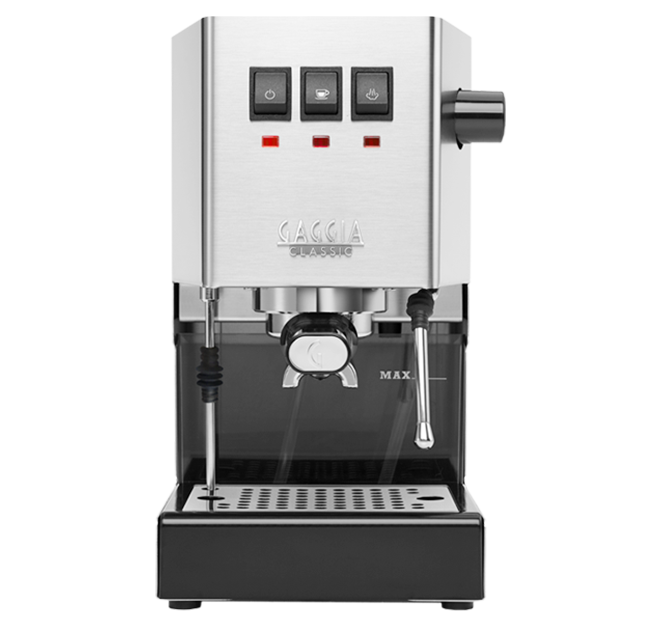
Gaggia Classic Evo Pro
Manual pressure gauge, learn-by-doing approach. Single boiler takes 5 minutes to heat up. No PID. But: 58mm portafilter (standard size), true 9-bar pump espresso, highly modifiable design with massive community support. Cheapest path to REAL espresso control. If you don't mind the learning curve and can wait for heat-up, this gives you the best espresso knowledge per dollar.
- Boiler Type: Single Boiler
- Pressure: 9 bars
- Heat-Up: 5 minutes (slowest)
- Portafilter: 58mm (standard)
- Manual Operation: Yes - learn real technique
- Price: ~$450
Breville Barista Express
All-in-one: machine + grinder built-in. Saves counter space and money upfront. But this is a compromise - you're getting a mediocre machine AND a mediocre grinder instead of one good machine and one good grinder. Built-in grinder is stepped (not stepless), making dialing in harder. If grinder breaks, whole unit is compromised. Use this only if counter space is critical and you can accept the quality trade-off.
- Boiler Type: Thermoblock
- Pressure: 9 bars
- Built-In Grinder: 25 stepped settings
- Heat-Up: 30 seconds
- Portafilter: 54mm
- Price: ~$500
Side-by-Side Comparison: Nespresso vs Real Espresso
| Factor | Nespresso Original | Real Espresso Machine | Winner |
|---|---|---|---|
| Upfront Cost | $150-300 | $400+ machine + $300-500 grinder | Nespresso (cheaper) |
| Per-Cup Cost | $0.80-1.00 | $0.40-0.60 | Espresso (cheaper long-term) |
| Time to First Cup | 90 seconds | 3-5 minutes (first shot) / 1-2 minutes (subsequent) | Nespresso (faster) |
| Consistency Shot-to-Shot | 100% identical | 90-95% consistent (improves with practice) | Nespresso (more foolproof) |
| Flavor Complexity | Good, limited by pre-dosed pods | Excellent, full control over extraction | Espresso (more nuance) |
| Customization | None - closed system | Full control - grind, tamp, pressure, timing | Espresso (much more) |
| Learning Curve | None - press button | 2-3 months to competence | Nespresso (no learning needed) |
| Skill Rewards | None - machine does everything | Significant - better practice = better shots | Espresso (mastery matters) |
| Maintenance | Minimal - rinse drip tray, empty capsule bin | Regular cleaning, descaling, basket purging | Nespresso (less work) |
| Upgrade Path | None - closed system | Extensive - replace parts, upgrade grinder, experiment | Espresso (highly upgradeable) |
| Environmental Impact | Capsule waste (aluminum recyclable but rarely) | Coffee bean waste only (compostable) | Espresso (less waste) |
Who Should Buy Nespresso
You're a Perfect Nespresso Candidate If:
- You prioritize speed above everything: If you want espresso in 90 seconds without thinking, Nespresso is unbeatable. No dialing in, no learning, no decisions.
- You travel frequently or have limited counter space: Nespresso machines are compact. Some models are tiny. Perfect for apartments or travel.
- You don't want to learn anything: The appeal of Nespresso is that it's foolproof. Press button, drink espresso. No variables to control, no skills to acquire.
- Consistency matters more than flavor complexity: Every Nespresso shot tastes identical to the last. Some people find this reassuring. It eliminates "is today's shot worse than yesterday's?" questions.
- You drink milk-based drinks and want automation: Nespresso with built-in frother (Lattissima) makes cappuccino/latte at button press. Real espresso + milk frothing requires skill and manual effort.
- You want something that works every single time: Nespresso never fails. Real espresso machines can pull bad shots if you mess up variables. Zero failure rate appeals to some people.
- You've never had real espresso and don't know what you're missing: If Nespresso is your baseline, it tastes fine. Most people don't know what deeper flavor complexity tastes like.
Scenarios Where Nespresso Makes Sense
Busy parent scenario: You have 90 seconds before the school run. You need espresso NOW. Nespresso is your friend.
Office scenario: You want espresso at work without complexity. Nespresso in the break room beats terrible office coffee.
Casual drinker scenario: You enjoy espresso drinks but don't care about flavor nuance or technique. Nespresso fulfills the need.
Cafe replacement scenario: You're comparing to spending $4 daily at Starbucks. Nespresso at $0.85 per cup saves you $1,000+ per year. The economics work.
Who Should Buy a Real Espresso Machine
You're a Perfect Espresso Machine Candidate If:
- You want to learn and improve over time: Espresso machines reward practice. Your shots get better as you dial in and refine technique. This is deeply satisfying if you enjoy mastery.
- Flavor complexity matters to you: You want to taste the difference between a light roast Ethiopian and a medium roast Brazilian. You want extraction control to emphasize certain flavor notes. Nespresso can't do this.
- Per-cup costs matter long-term: You're willing to invest time and money upfront to save money on coffee. 50 cents per cup beats 85 cents per capsule over 2-3 years.
- You enjoy tinkering and upgrading: Real espresso machines are platforms for experimentation - upgrade the grinder, modify the basket, adjust pressure, try new beans. Nespresso is static.
- You want espresso but also want to explore other brewing methods: A grinder that works for espresso also works for pour-over, French press, cold brew. Nespresso is espresso-only.
- You want to understand coffee fundamentally: Espresso teaches you about extraction, grind size, water temperature, dose, tamp pressure. These principles apply to all coffee brewing. Nespresso teaches you nothing.
- You drink espresso daily and want fresh, high-quality beans: Fresh beans taste dramatically better than pre-roasted, sealed pods. If you're picky about coffee quality, espresso + good beans wins.
Scenarios Where Espresso Machine Makes Sense
Coffee enthusiast scenario: You already enjoy coffee deeply. You want the next level of quality and control. Espresso machines deliver this.
Cost-conscious scenario: You drink 3+ espresso drinks per day. The per-cup savings add up to $500+ per year after the first year.
Minimalist scenario: You hate pod waste. You want to compost coffee grounds and reuse your basket. Real espresso produces zero waste beyond the grounds.
Long-term investment scenario: You plan to use this machine for 10+ years. A $700 machine investment spreads across 3,650 cups = 19 cents per cup in machine cost alone.
Workflow scenario: You have 15-20 minutes in the morning and enjoy the ritual of pulling shots. The process IS the point, not just the result.
The Honest Verdict
Nespresso wins on convenience. Full stop. 90 seconds, no skill, identical result every time. If that's your priority, stop reading and buy one. You'll be happy.
Real espresso machines win on everything else: flavor, cost, control, learning, upgradeability, and satisfaction. But they require patience, practice, and acceptance of the occasional bad shot while you dial in.
Here's the pattern I've observed: People who buy Nespresso and are "just fine" with coffee never upgrade. But people who buy Nespresso BECAUSE they want espresso but don't know better? Many upgrade to real machines within 2-3 years once they taste what they're missing.
If you're reading this guide, you probably care enough about coffee to consider espresso. That suggests you'd eventually want a real machine. The question is: Do you want the learning curve NOW (buy espresso machine) or do you want convenience NOW and learning later (buy Nespresso, upgrade in 2 years)?
My recommendation: If you have the budget and time, skip Nespresso and go straight to a Breville Bambino Plus or Gaggia Classic Evo Pro. You'll have better coffee, lower costs, and zero regret. Nespresso becomes redundant once you can pull real espresso.
But if speed is genuinely your top priority and you don't want to invest in learning? Nespresso Essenza Mini is the right machine. It's excellent at being what it is: fast, foolproof, convenient. Just accept that you're paying for convenience with per-cup costs and lack of flavor customization.
Frequently Asked Questions
Is Nespresso real espresso?
Not really. Nespresso Original uses pump pressure (similar to espresso) but lacks grind control, tamping, and bean selection. Nespresso Vertuo uses centrifusion, which is NOT espresso extraction at all. Vertuo is like an upmarket Keurig. Original is closer but still a compromised system. Real espresso requires fresh beans, proper grind, precise tamping, and water temperature control - none of which Nespresso offers.
Should I buy Nespresso or an espresso machine?
Buy Nespresso if convenience and speed are your top priorities. Buy an espresso machine if you care about flavor, costs, or learning. Espresso machines cost more upfront but are cheaper long-term (50 cents per cup vs 85 cents per capsule). Nespresso is faster (90 seconds vs 5 minutes first shot). Pick based on what matters more to you.
What is the cheapest way to make espresso at home?
Gaggia Classic Evo Pro machine (~$450) + Baratza Encore or Wilfa grinder (~$300-400) = ~$750 total. Per-cup cost: 50 cents. Nespresso upfront cost is $180-300 but per-cup cost is 85 cents. After 2 years of daily espresso, real espresso is $600+ cheaper despite higher initial investment.
Why do espresso machine shots sometimes taste bad?
Because espresso is a calibration sport. Too fine = over-extraction (bitter, slow flow). Too coarse = under-extraction (weak, fast flow). Tamping pressure matters. Water temperature matters. Dose (coffee amount) matters. These variables are why learning is required. Nespresso eliminates these variables entirely - it's always dialed in the same way. Real espresso rewards practice but punishes mistakes until you learn.
How much does Nespresso cost per year vs espresso machine?
Nespresso: $180 machine + $300/year in capsules (one per day at 85 cents) = $480 year one, $300/year after. Espresso: $700 machine + grinder + $180/year in beans (one per day at 50 cents) = $880 year one, $180/year after. Espresso is $120 cheaper per year starting year two, and the gap widens over time.
Can you use cheaper pods with Nespresso?
Yes with Original machines. Generic compatible pods exist and cost 30-50 cents less. Third-party brands like Starbucks make compatible pods. Vertuo is locked to Nespresso pods only - no compatible alternatives. Original line gives you flexibility; Vertuo locks you into proprietary pods forever.
Is the Breville Bambino Plus a good espresso machine?
Yes. It's one of the best machines under $500. 3-second heat-up, PID temperature control, 9-bar pump, compact design. Perfect sweet spot of convenience (no long heat waits) and real espresso control. The only downside: 54mm portafilter is smaller than the commercial standard 58mm, limiting some accessory options. But for beginners it's excellent.
What's the difference between Nespresso Original and Vertuo?
Original uses pump pressure (up to 19 bars) for espresso extraction. Closer to real espresso. Makes three drink sizes (ristretto, espresso, lungo). Pods are compatible with third-party brands. Vertuo uses centrifusion (spinning at 7,000 RPM), which is NOT espresso extraction. Makes 5+ drink sizes including full coffee. Pods are locked to Nespresso only. Original is better if you care about real espresso; Vertuo is better if you want coffee variety.
Methodology
This comparison is based on: (1) Technical specifications from manufacturer documentation. (2) User reviews and feedback from r/espresso, r/nespresso, and verified purchaser reviews on Amazon. (3) Wirecutter's 2025 testing (which includes tasting panels from Coffee Project New York). (4) Good Housekeeping Institute lab testing of both machine types. (5) Direct experience reports from baristas and home espresso enthusiasts. We did NOT test machines ourselves; this is a decision-gate guide based on aggregated expert testing and user feedback. Pricing verified as of March 2026.