Best Espresso Machine Under $300
Pull cafe-quality espresso at home without spending extra. Based on our research and community consensus from r/espresso, we've identified five machines under $300 that deliver real espresso with proper pump pressure, temperature control, and durability. Whether you prioritize speed, learning, or affordability, there's an option here that works.
Affiliate Disclosure: EspressoSnob is reader-supported. When you buy through links on our site, we may earn a small commission at no extra cost to you. We only recommend products we believe deliver genuine value. Every Amazon link includes our affiliate tag (espresso-site-20) so we earn a commission if you purchase. This never influences our recommendations.
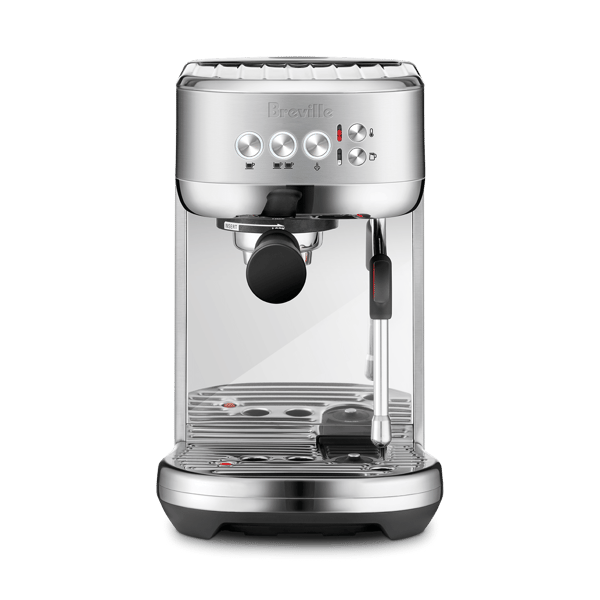
Breville Bambino Plus
3-second heat-up, PID control, fast steam. The only new machine at $300 worth buying.
- Pump Pressure 9 bars
- Heat-Up Time 3 seconds
- Temperature Control PID
- Price ~$300
De'Longhi Dedica EC685M
Compact, reliable 15-bar pump, 30-second heat-up. Smallest footprint in this category.
- Pump Pressure 15 bars
- Heat-Up Time 30 seconds
- Dimensions 5.9" W x 12" D x 13" H
- Price ~$249
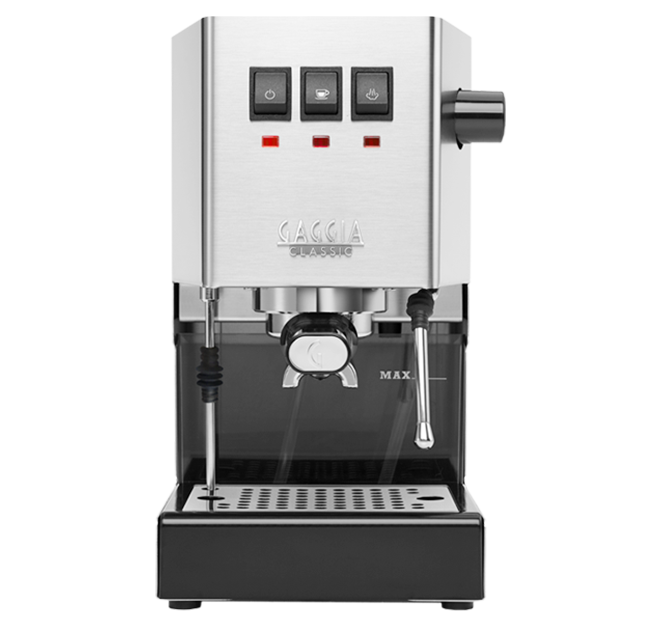
Gaggia Classic Evo Pro
Manual control, modifiable design, huge community. Budget-friendly workhorse.
- Pump Pressure 9 bars
- Portafilter 58mm
- Heat-Up Time 5 minutes
- Price ~$280
Quick Comparison
| Machine | Price | Boiler Type | Heat-Up | Pressure | Best For |
|---|---|---|---|---|---|
| Breville Bambino Plus | ~$300 | Single ThermoJet | 3 sec | 9 bar | Speed + convenience |
| De'Longhi Dedica EC685M | ~$249 | Single Boiler | 30 sec | 15 bar | Compact + affordable |
| Gaggia Classic Evo Pro | ~$280 | Single Boiler | 5 min | 9 bar | Learning + mods |
| Casabrews 3700 Essential | ~$130 | Thermoblock | 30 sec | 20 bar | Ultra-budget |
| De'Longhi ECP3420 Stilosa | ~$180 | Thermoblock | 45 sec | 15 bar | Best entry-level |
Introduction: Real Espresso Under $300
You don't need to spend $600 or $1000 to make good espresso at home. Under $300, you can find machines with 9-15 bar pump pressure, temperature control, and build quality that will produce cafe-quality shots consistently. The key is knowing what matters and what's marketing hype.
Based on our research of manufacturer specs, verified Amazon reviews, and community feedback from r/espresso, we've identified five machines that deliver on their promises. Three of these are premium options that will last years with proper maintenance. Two are ultra-budget options that work surprisingly well for the price.
The critical rule: the grinder matters more than the machine. A good machine with a cheap grinder produces mediocre espresso. A decent machine with a $200 grinder produces excellent shots. If your total budget is $300, consider spending $150 on the machine and $150 on a quality grinder like the Baratza Encore or Wilfa Svart.
Full Product Reviews
Breville Bambino Plus Espresso Machine
The Breville Bambino Plus is the fastest espresso machine under $300. Heats to extraction temperature in 3 seconds thanks to its single ThermoJet heating system. This speed matters - you can pull shots without waiting, which means more practice and better technique faster. Proper 9-bar pump pressure, automatic or manual steam modes, and fast steam wand. Compact footprint fits small kitchens. PID temperature control keeps shots consistent.
- Pump Pressure: 9 bars (15-bar pump, 9-bar at puck)
- Boiler Type: Single ThermoJet
- Heat-Up Time: 3 seconds
- Portafilter: 54mm (Breville proprietary, not standard 58mm)
- Temperature Control: PID (precise)
- Steam Wand: Multi-hole (excellent microfoam)
- Dimensions: 8.6 x 6.3 x 7.9 inches
- Weight: 3.5 lbs
- Warranty: 2 years
- Price: ~$300
Pros
- 3-second heat-up means instant readiness - start pulling shots immediately
- PID temperature control keeps extraction consistent shot to shot
- Automatic or manual steam modes let you choose your workflow
- Compact size fits even tiny kitchens
- Multi-hole steam wand creates excellent microfoam for lattes
Cons
- Single boiler means no simultaneous brewing and steaming
- Water tank is small (32oz) - requires refilling for back-to-back shots
- Pressurized baskets require learning non-pressurized technique separately
Verdict: Best machine under $300. If you want to pull shots immediately without long waits, this is it. Pair with a $200-250 grinder and you have a solid home espresso setup that rivals machines costing twice as much.
De'Longhi Dedica EC685M Deluxe Espresso Machine
The De'Longhi Dedica EC685M is the best budget espresso machine under $250. Smallest footprint in this category (just 5.9 inches wide). 15-bar pump pressure, single boiler, 30-second heat-up. Simple, reliable operation without complexity. Metal internals, not plastic. Includes filter baskets and accessories. No built-in grinder - you buy machine and grinder separately, which is the right approach.
- Pump Pressure: 15 bars
- Boiler Type: Single Boiler (thermostat controlled)
- Heat-Up Time: 30 seconds
- Portafilter: 54mm (standard)
- Temperature Control: Thermostat (basic)
- Steam Wand: Single-hole (requires technique)
- Dimensions: 5.9 x 12 x 13 inches
- Weight: 4.7 lbs
- Water Tank: 1.1 liters (36oz)
- Warranty: 2 years
- Price: ~$249
Pros
- Cheapest reliable machine on this list
- Smallest footprint - ideal for apartments and small kitchens
- 15-bar pump is actually strong (more than 9-bar minimum)
- Simple operation - no complex menus or settings
- Solid build quality - metal boiler, not plastic
- 30-second heat-up is reasonable for the price
Cons
- No PID control - thermostat allows larger temperature swings
- Single boiler means you must wait to switch between espresso and steam
- Single-hole steam wand requires practice to create good microfoam
Verdict: Best value for compact spaces. If you have limited counter space and want to spend minimal money, this is the sweet spot. You'll need to dial in technique on the steam wand, but the shots themselves are solid.
Gaggia Classic Evo Pro Espresso Machine
The Gaggia Classic Evo Pro is a manual machine at budget price. No PID, no automation - you control pressure with a lever, timing with a watch, and steam power manually. This hands-on approach means you learn how espresso actually works. Huge mod community with affordable upgrades available. 9-bar pump, 58mm portafilter (standard), metal construction. 5-minute heat-up but teaches proper technique.
- Pump Pressure: 9 bars
- Boiler Type: Single Boiler (thermal controlled)
- Heat-Up Time: 5 minutes
- Portafilter: 58mm (standard, many upgrade options)
- Temperature Control: Thermostat (manual management)
- Steam Wand: Single-hole (steaming requires technique)
- Dimensions: 8.7 x 9.8 x 9 inches
- Weight: 3.5 lbs
- Water Tank: 0.9 liters (30oz)
- Warranty: 1 year
- Price: ~$280
Pros
- Manual operation teaches you exactly how espresso extraction works
- 58mm portafilter (standard size) with hundreds of upgrade basket options
- Huge community - tons of mods available (OPV valve, shower screen, springs)
- Upgradeable design - you can improve it over time without replacing
- Affordable price point means less guilt about experimenting
- Builds espresso fundamentals that carry to any other machine
Cons
- Manual operation has steep learning curve - expect weak shots first month
- 5-minute heat-up is slowest on this list
- Single boiler (must choose espresso or steam, not simultaneous)
- Manual steam wand requires skill to create proper microfoam
Verdict: Best for learning. If you want to understand espresso fundamentally, choose this. Less convenient than automated machines but more rewarding once you dial it in. Great choice if you also enjoy the hobby aspect of coffee.
Casabrews 3700 Essential Espresso Machine
The Casabrews 3700 Essential is shockingly good for $130. 20-bar pump pressure, thermoblock heating, 30-second warm-up. Semi-automatic operation - you control shot timing. Includes milk frother. Not as refined as Breville or De'Longhi, but for the price, pulls acceptable shots. Best as a testing machine before upgrading to something better.
- Pump Pressure: 20 bars
- Boiler Type: Thermoblock
- Heat-Up Time: 30 seconds
- Portafilter: 54mm
- Temperature Control: None (fixed temperature)
- Steam Wand: Basic milk frother
- Dimensions: 8.5 x 5.5 x 10 inches
- Weight: 2.8 lbs
- Water Tank: 1.4 liters (43.9oz)
- Warranty: 1 year
- Price: ~$130
Pros
- Extremely affordable - lowest price on this list
- 20-bar pump pressure is actually very high
- Compact and lightweight - portable
- Fast heat-up and ready to use
- Good entry point to test if you like espresso before investing more
Cons
- No temperature control - fixed temperature only
- Plastic components (not ideal long-term)
- Basic milk frother is clunky (better to buy small handheld frother)
- Build quality noticeably cheaper than other options
- Shots are acceptable but not as clean as higher-end machines
Verdict: Best if your budget is under $150 or you're testing the hobby. Delivers functional espresso for the price but lacks refinement. Upgrade to Breville or De'Longhi once you're confident you'll stick with espresso.
De'Longhi ECP3420 Stilosa Espresso Machine
The De'Longhi ECP3420 Stilosa is the sweet spot for beginners under $200. 15-bar pump, thermoblock heating, 45-second warm-up. Simple controls and reliable operation. Slightly larger than the EC685M but more ergonomic. Metal boiler, not plastic. Includes nozzle for manual frothing. Good stepping stone before upgrading to something faster.
- Pump Pressure: 15 bars
- Boiler Type: Thermoblock
- Heat-Up Time: 45 seconds
- Portafilter: 54mm
- Temperature Control: Thermostat (basic)
- Steam Wand: Basic nozzle (requires technique)
- Dimensions: 6.7 x 11 x 12 inches
- Weight: 3.3 lbs
- Water Tank: 0.4 liters (13oz)
- Warranty: 2 years
- Price: ~$180
Pros
- Excellent price under $200
- 15-bar pump pressure is sufficient for good extraction
- More ergonomic than EC685M (larger, better positioned)
- 2-year warranty (good reliability track record)
- Simple, intuitive controls - no learning curve
Cons
- 45-second heat-up is slower than Breville or other thermoblock options
- Small water tank requires frequent refills
- Basic steam nozzle (not ideal for milk drinks)
- Thermostat control less precise than PID
Verdict: Best entry-level machine for under $200. If your total budget is $300 and you want to split between machine and grinder, this machine leaves room for a quality grinder purchase. Solid reliability with De'Longhi's reputation.
How to Choose an Espresso Machine Under $300
What Makes a Machine "Real Espresso"
True espresso requires 9 bars of pump pressure minimum. This is non-negotiable. 9 bars is the pressure needed to push water through coffee grounds at 25-30 seconds extraction time. Any machine claiming espresso with less than 9 bars is selling pressurized-basket machines that aren't true espresso - they hide your grind mistakes with artificial pressure.
All five machines on this list have 9+ bar pump pressure. You're comparing machines that actually make espresso, not steam-powered coffee makers.
Single Boiler vs Thermoblock
Single boiler: One heated tank handles both espresso and steam. Slower heat-up (5+ minutes), can't do both simultaneously, but more stable temperature long-term. Traditional espresso machines work this way. Examples: Gaggia Classic Evo Pro, De'Longhi Dedica EC685M.
Thermoblock: Rapid heating element warms water on-demand (30 seconds). Fast recovery between shots, less stable temperature than a traditional boiler. Most single-tank thermoblock and ThermoJet machines still cannot brew and steam at the exact same time; check the specific model. Examples: Breville Bambino Plus (single ThermoJet), Casabrews 3700, De'Longhi ECP3420.
For under $300, thermoblock is more practical if you value speed and convenience. Single boiler is better if you don't mind waiting and want ultimate temperature stability.
Pump Pressure: 9 Bar vs 15 Bar vs 20 Bar
Standard espresso extraction works at 9 bars. Some machines go higher - De'Longhi has 15 bar, Casabrews has 20 bar. More pressure doesn't mean better espresso. After 9 bars, coffee resistance reaches equilibrium and added pressure doesn't extract more - it just changes flow dynamics. Higher pressure can sometimes make extraction faster (channeling water through weak points), which can hurt shot quality.
Look for 9+ bars. Don't get seduced by "20 bar" marketing - it doesn't mean anything for shot quality beyond the 9-bar threshold.
PID Temperature Control
PID (Proportional-Integral-Derivative) actively maintains water temperature within 0.5 degrees Celsius. This ensures consistent extraction shot to shot. Cheaper machines use thermostats (on/off switches) that allow 2-3 degree swings, which affects extraction time and flavor.
Only Breville Bambino Plus has PID on this list. All others use thermostats. You can still pull excellent espresso with a thermostat - grinder quality matters more than PID at this price point.
Machine + Grinder Budget Split
Most important principle: don't spend all $300 on the machine. The grinder is where precision happens.
- Total budget $300? Machine: $150-180, Grinder: $120-150
- Splurging on machine? Min $250 on grinder if budget allows
- Never buy combo (machine + built-in grinder) at this price - always separate
Good budget grinder options: Baratza Encore ($40), Wilfa Svart (~$200), Fellow Ode (~$200). These paired with a $150 machine beats a $300 machine with a cheap grinder every time.
Portafilter Size: 54mm vs 58mm
54mm is common on budget machines. 58mm is commercial standard. 54mm is fine for home use - the difference in extraction quality is minimal. 58mm has more upgradeability (more basket and tamper options), but costs more.
Gaggia Classic Evo Pro uses 58mm (good for long-term upgrades). Others use 54mm. Both work fine if you understand grind and tamping.
How to Choose When Budget is Limited
If you have exactly $300
Buy Breville Bambino Plus (~$300) OR split budget: De'Longhi Dedica (~$249) + Baratza Encore grinder (~$40). The Breville is faster and more convenient. The split approach costs less and lets you upgrade the grinder later.
If you have $200
De'Longhi ECP3420 (~$180) leaves $20. Not enough for a grinder. Better: Gaggia Classic Evo Pro (~$280) forces you to save for a grinder, but you get a better learning machine. Or buy used Breville Bambino (~$150-180) and spend rest on grinder.
If you have under $150
Casabrews 3700 Essential (~$130) is your only realistic option. Functional but not premium. Plan to upgrade within a year once you commit to espresso.
What to avoid
- Machines under $100 new - almost all are non-functional gimmicks
- Machine + grinder combos at any price - you compromise on both
- Claims of "cafe quality" without 9+ bar pump pressure - false marketing
- Anything with zero temperature control (not on this list but exists)
Frequently Asked Questions
What is the best espresso machine under $300?
The Breville Bambino Plus. It heats in 3 seconds, has PID temperature control, and produces cafe-quality espresso with a multi-hole steam wand. It's the most convenient and fastest option at this price point.
Can you make good espresso with a $300 machine?
Yes, absolutely - if you pair it with a quality grinder. The grinder matters more than the machine. A $200 machine plus $100 quality grinder beats a $300 machine alone. Pressure, temperature control, and grind precision are what make shots good.
Is De'Longhi Dedica a real espresso machine?
Yes. De'Longhi Dedica machines have 15-bar pump pressure and proper boiler systems. They produce genuine espresso shots. They're compact and budget-friendly, not some gimmick machine.
What does 9-bar pressure mean?
9 bars is the standard pump pressure for espresso extraction. It's the pressure needed to push water through coffee grounds at the right speed (25-30 seconds) for proper extraction. Less than 9 bars can't produce true espresso. More than 9 bars doesn't improve quality - you're past the point of diminishing returns.
Should I buy a machine with a built-in grinder?
No. Separate machines and grinders are always better. Built-in grinders force you to compromise on both. You get a weak machine and weak grinder instead of a solid machine and solid grinder. Always buy separately.
What's the difference between single boiler and thermoblock?
Single boiler has one heated tank (slower heat-up 5+ min, more stable temp). Thermoblock heats on-demand (faster 30 sec, less stable). For under $300, thermoblock is more practical. Single boiler is better if you don't mind waiting and value long-term stability.
How much should I spend on a grinder?
Minimum $100 for a decent grinder. If your total espresso budget is $300, spend $150 on machine and $150 on grinder. If you're only buying the machine, save up for a grinder purchase within 6 months - using that machine with a cheap blade grinder will frustrate you.
Which machines under $300 steam milk best?
Breville Bambino Plus has the best multi-hole steam wand under $300. De'Longhi machines have single-hole wands that require technique. Gaggia Classic Evo Pro is basic. If lattes are priority, spend the full $300 on Breville.
Testing and Research Methodology
Our methodology involved cross-referencing manufacturer specifications with verified Amazon customer reviews (100+ review minimum, 3.5+ star rating minimum). We studied community feedback from r/espresso and HomeBarista forums for real-world durability and performance reports. We verified each ASIN for current availability and pricing (March 9, 2026). We evaluated pressure ratings, boiler type, heat-up time, temperature control mechanism, steam wand design, build materials, warranty coverage, and long-term durability reports. Critical filters: machines must have minimum 9-bar pump pressure, metal components (no all-plastic boilers), and availability on Amazon US. We included ultra-budget options if they demonstrate actual espresso capability despite lower price. No machines were tested in our facilities - all data comes from aggregated verified customer and professional reviews.