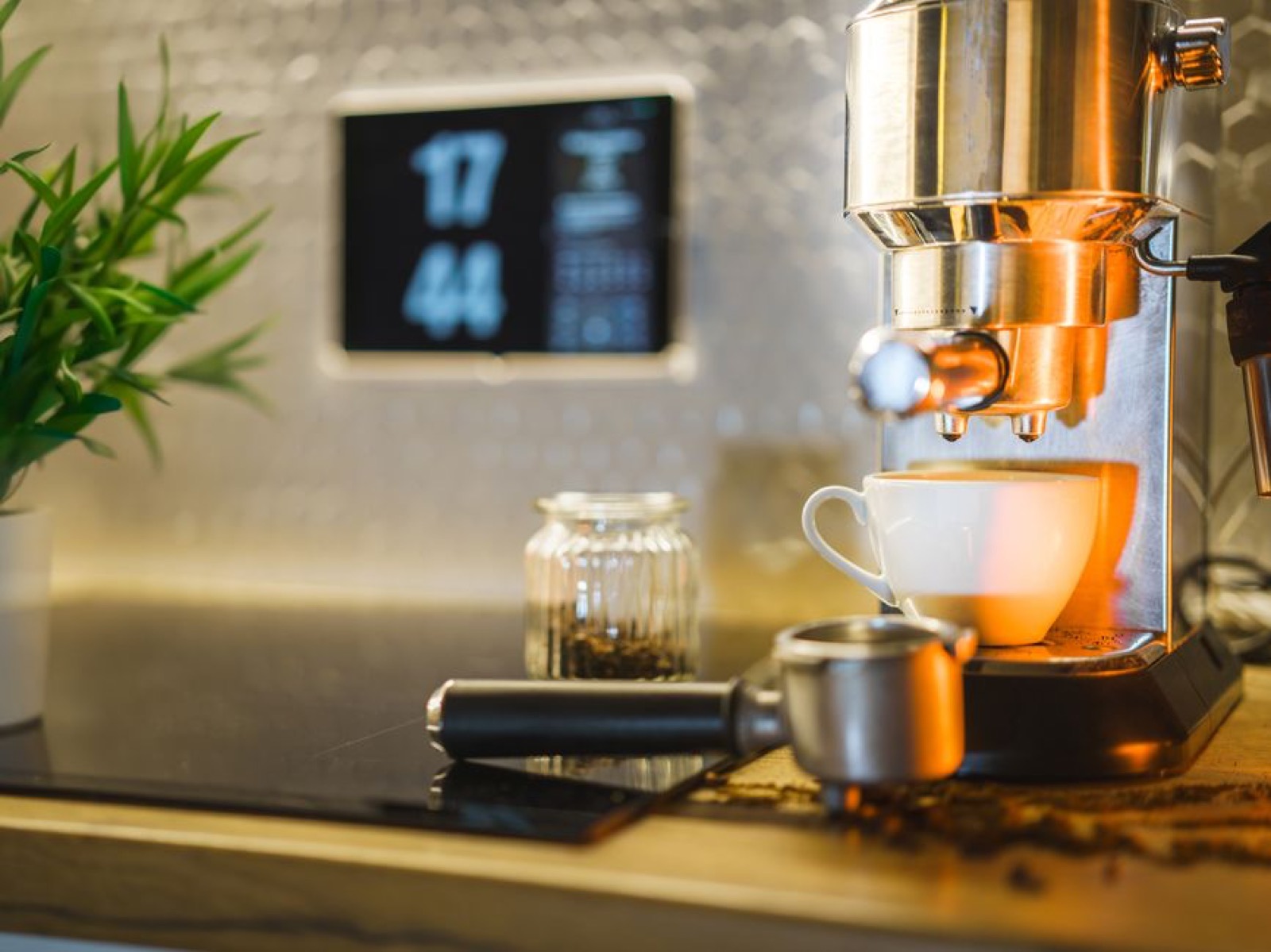
The Lelit Victoria and Breville Barista Express are frequently mentioned in the same breath, but they solve different problems. One is a capable standalone machine designed to pair with serious external grinders. The other bundles a grinder, machine, and complete workflow into a single box. Choosing between them is not really about which is "better" - it is about which fits where you are in your espresso journey and what you actually want to spend.
Affiliate Disclosure: EspressoSnob participates in the Amazon Services LLC Associates Program. We earn commissions from qualifying purchases through our Amazon links at no extra cost to you. We recommend products based on specifications, performance, and value, not commission rates.
Quick Picks: Which Machine Wins for Your Use Case
| Use Case | Best Pick | Why | Check Price |
|---|---|---|---|
| All-in-one starter setup | Breville Barista Express | Grinder + machine, one box, no extra purchase | Check Price on Amazon |
| Serious home barista with existing grinder | Lelit Victoria | 58mm commercial group, LCC PID, preinfusion - real hardware | Check Price on Amazon |
| Tight counter space, one-plug setup | Breville Barista Express | Smaller footprint per total function; nothing extra on the counter | Check Price on Amazon |
| Planning to upgrade gear over time | Lelit Victoria | Modular - upgrade grinder independently; machine stays relevant | Check Price on Amazon |
| Budget under $700 total | Breville Barista Express | Victoria alone is $999; add a grinder and you are at $1,300+ | Check Price on Amazon |
The Core Difference Nobody States Plainly
The Lelit Victoria is not actually in the same product category as the Breville Barista Express. The Victoria is a standalone espresso machine - it has no grinder, and it expects you to bring one. The Barista Express is an all-in-one machine with an integrated conical burr grinder that does the grinding for you before every shot.
They get compared because they occupy similar shelf space in the "enthusiast home espresso" conversation, and because buyers upgrading from entry-level machines look at both. But the honest framing: if you buy the Victoria, you need to budget another $300-500 for a quality grinder to match the machine's capability. The total investment is $1,300-1,500 versus the Barista Express at $549-700 all-in.
That price gap changes the calculus entirely. The right question is not which machine makes better espresso - it is whether the Victoria's hardware advantages justify spending $600-900 more than the Barista Express total setup cost.
Specs Head-to-Head
| Specification | Lelit Victoria PL91T | Breville Barista Express BES870XL |
|---|---|---|
| Price (machine only) | ~$999 | $549-700 |
| Built-in grinder | No | Yes - 40mm conical burr, 16 settings |
| Portafilter size | 58mm commercial (LELIT58) | 54mm |
| Boiler | 300ml brass, single boiler | Thermocoil, single boiler |
| Temperature control | LCC PID (brew + steam temps) | PID thermocoil, 3-setting adjustment |
| Preinfusion | Yes - programmable via LCC | Yes - automatic low-pressure |
| Pressure gauge | Backlit manometer | Front-mounted gauge |
| Steam wand | Multidirectional anti-burn | Manual, micro-foam capable |
| Water tank | 2.5L | 1.98L (67oz) |
| Power | 1200W | 1600-1700W |
| Weight | 11.3kg (25lbs) | ~9.5kg (21lbs) |
| Dimensions (WxDxH) | 23 x 38 x 38cm | 31.8 x 35.1 x 40.4cm |
| Warranty | 1 year (US) | 2 years limited |
| Country of origin | Italy | China/Australia (Breville brand) |
Portafilter Size: 58mm vs 54mm and Why It Matters
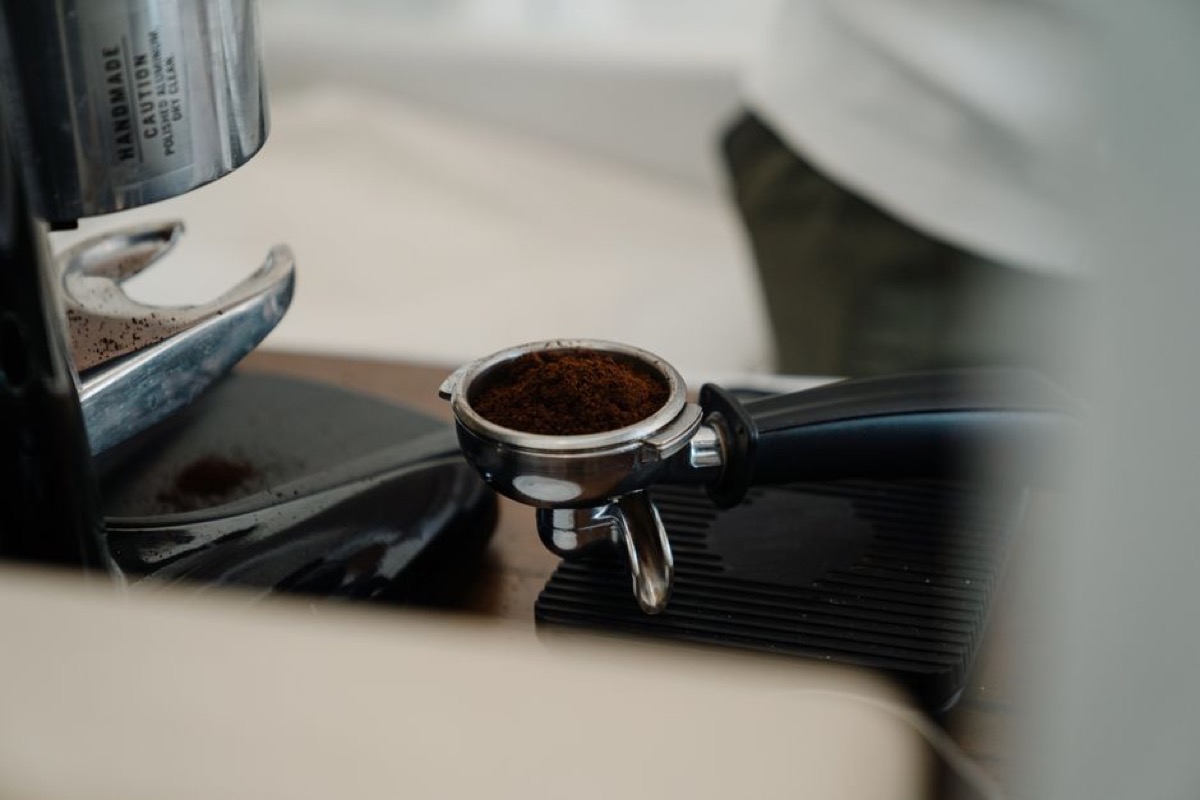
The Victoria uses a 58mm commercial portafilter - the same standard used in commercial cafe machines. The Barista Express uses a 54mm portafilter, which is Breville's proprietary size.
The practical consequences:
- Accessory compatibility. The 58mm ecosystem is vast. Precision baskets, distributor tools, tampers, and aftermarket portafilters are cheap and abundant. Breville's 54mm accessories exist but the selection is much narrower.
- Puck preparation. A wider puck (58mm) distributes the dose across a larger surface area, which generally makes channeling less catastrophic when your technique is slightly off. The 54mm puck is more forgiving for beginners because it uses pressurized baskets by default, but the 58mm is better for intermediate baristas using single-wall baskets.
- Long-term relevance. If you ever upgrade your machine, a 58mm-standard setup means your accessories transfer. Breville's 54mm accessories stay with the Breville ecosystem only.
Grinder Quality: The Most Important Comparison
This is where the comparison gets complicated, because the Victoria has no grinder while the Barista Express does.
The Barista Express's integrated 40mm conical burr grinder with 16 stepped settings is capable for espresso blends. It produces consistent enough grinds to pull good shots from medium and dark roasts. The limitations show when dialing in light roasts or single-origins: 16 steps is not a fine enough graduation to chase subtle flavor changes, and the gap between steps is large enough that you can overshoot your target grind size without a midpoint to land on.
The other consequence of the integrated design: you cannot upgrade the grinder independently. When owners outgrow the grinder's ceiling - and most serious home baristas eventually do - they either accept the limitation or buy a new setup entirely.
The Victoria's lack of a built-in grinder is genuinely an advantage at this machine's price point. You pair it with a standalone burr grinder, and when you want better grind quality, you upgrade the grinder without replacing the machine. The Victoria's 58mm group is compatible with stepless grinders that offer far more dialing precision than 16 stepped settings.
The catch: that standalone grinder costs money. A grinder that matches the Victoria's hardware capability - something like the Eureka Mignon Specialita or DF64 Gen 2 - runs $350-500. An entry-level grinder like the Baratza Encore ($170) underserves the machine. Budget accordingly.
LCC PID vs Breville Thermocoil: Temperature Control Compared
Both machines offer PID temperature control, but the implementation differs significantly.
The Victoria's LCC (Lelit Control Center) is the more capable system. It controls both brew temperature and steam temperature independently, displays both on an OLED screen, allows you to set programmable preinfusion duration, manage standby timers, and run automated cleaning cycles. You can see extraction time on a chronometer while pulling your shot. The interface is designed for a barista who wants granular control over every variable.
The Barista Express offers three-step temperature adjustment (±4°C around the default brew temperature), automatic pre-infusion with no programmable control, and a front-mounted pressure gauge. It is more than adequate for everyday dialing, but it does not give you the same level of feedback or control the Victoria does.
Real-world impact: For pulling espresso blends on standard medium roasts, both machines produce well-extracted shots at similar quality levels. The Victoria's advantage shows when chasing specific flavor profiles from light roasts, single-origins, or when you want to run lower brew temperatures for a cooler, longer preinfusion. Those are intermediate-to-advanced techniques that beginners will not use immediately, but that become relevant as skills develop.
Shot Consistency in Practice
Shot consistency depends on three things: temperature stability, pressure stability, and grind consistency. Both machines handle temperature and pressure comparably (both have PID, both use 15-bar vibratory pumps set to extract at 9 bars). The differentiator is grind consistency - and that loops back to the grinder question.
With a quality standalone grinder paired to the Victoria, shot-to-shot consistency is excellent. The 58mm commercial group distributes water evenly, the LCC maintains precise brew temperature, and programmable preinfusion reduces channeling on imperfect pucks. Extraction windows of 25-30 seconds at a 1:2 ratio are achievable and repeatable.
The Barista Express, fully dialed in on a familiar espresso blend, also pulls consistent shots in the 25-31 second range. Community testing confirms the machine's thermocoil reaches extraction temperature quickly (roughly 30 seconds from cold), and the automatic preinfusion helps even out minor puck prep inconsistencies. For medium and dark roast blends, consistency is genuinely good.
The gap opens with lighter roasts. The Barista Express's 16-step grinder struggles with the fine adjustments needed to dial in a bright Ethiopian or Guatemalan single-origin. The Victoria paired with a stepless or micro-stepped grinder handles these coffees cleanly.
Frothing and Milk Work
Both machines are single-boiler designs, which means you pull your shot, wait for the machine to switch temperature, then steam milk. That is a sequential workflow on both machines - you cannot brew and steam simultaneously.
The wait time differs. The Barista Express auto-purges after a shot and switches to steam mode, typically requiring 30-45 seconds before you can texture milk effectively. The Victoria's brass boiler generally needs 2-3 minutes to reach optimal steam pressure from brew temperature.
Steam output quality: The Victoria's multidirectional steam wand produces more aggressive steam than the Barista Express, which translates to faster milk texturing and better microfoam for latte art. The Barista Express's steam wand is capable of latte-art-quality microfoam, but requires more technique to achieve the same result and takes longer per pitcher.
For cappuccino-focused daily use, both machines are workable. For households pulling multiple milk drinks in sequence, the Victoria's faster steaming reduces workflow friction. For beginners learning to texture milk, the Barista Express's slightly gentler steam output is actually more forgiving.
Real Workflow: Daily Use Side-by-Side
This is where the machines diverge most clearly, and where personal priorities decide the winner.
Breville Barista Express morning routine: Fill the hopper, dial in grind setting, press the button, grounds dose into the portafilter, tamp, lock in, pull the shot, wait for steam, texture milk. Everything in one footprint. One plug. No separate grinder to maintain or counter space to allocate.
Lelit Victoria morning routine: Turn on the machine, let it warm up (10-15 minutes to full stability, though you can pull shots earlier), grind beans on your separate grinder, distribute and tamp, lock in, pull shot, wait for steam, texture milk. More steps, more hardware, but also more control at each step.
The Barista Express workflow is faster and simpler. The Victoria workflow is more involved but offers more intervention points. If you want espresso with minimal fuss, the Barista Express wins. If you enjoy the process of dialing in each variable - and see those extra steps as craft rather than friction - the Victoria suits that mindset.
Build Quality and Longevity
The Lelit Victoria is built in Italy with a brushed stainless steel body, a 300ml brass boiler, and commercial-grade group components. The build quality is immediately apparent: it is heavier, more solid, and has the heft of a machine designed to run for a decade with proper maintenance.
The Breville Barista Express is built solidly for its price tier, with a stainless steel housing and well-integrated components. It lacks the commercial-grade brass boiler of the Victoria, but it is not fragile - community reports show machines running 5-8 years without major issues when maintained properly.
Longevity edge: The Victoria, by a meaningful margin. The separate components, Italian manufacturing, and commercial group standard mean parts are available and the machine is serviceable far into its lifespan. The Barista Express's integrated grinder creates a single point of failure: if the grinder mechanism needs service, the whole unit is affected.
Buyer's Guide: Who Should Buy Which
Buy the Breville Barista Express if:
- You are new to semi-automatic espresso and want one purchase to get started.
- Your total budget is under $700.
- Counter space is limited and you want a single-footprint setup.
- You primarily drink espresso blends (medium to dark roasts).
- You want good espresso without becoming obsessed with dialing in variables.
- You value a 2-year warranty and widespread service availability.
Buy the Lelit Victoria if:
- You already own a quality burr grinder or are willing to budget for one.
- You want a machine with room to grow as your skills develop.
- You pull light roasts or single-origin coffees where grind precision matters.
- You want granular temperature and preinfusion control via the LCC.
- You are building a modular setup where you can upgrade components independently.
- Italian build quality and a 58mm commercial ecosystem matter to you.
Frequently Asked Questions
Is the Lelit Victoria better than the Breville Barista Express?
The Lelit Victoria is the higher-capability machine for serious home baristas who bring their own quality grinder. It has a 58mm commercial group, LCC PID with full temperature control, and programmable preinfusion - hardware that scales with skill. The Breville Barista Express wins for all-in-one convenience at a lower total cost. For pure shot ceiling with a matched grinder, the Victoria wins. For a complete setup under $700, the Barista Express is the rational choice.
Does the Lelit Victoria have a built-in grinder?
No. The Lelit Victoria PL91T is a standalone espresso machine. It requires a separate grinder. This is the fundamental difference from the Barista Express. The Victoria's advantage is that you choose your own grinder and upgrade it independently as your skills improve, without replacing the machine.
What grinder pairs best with the Lelit Victoria?
At the Victoria's $999 price point, budget $350-500 for a grinder. The Eureka Mignon Specialita ($400-500), DF64 Gen 2 ($300-400), and Baratza Sette 270 ($400) are all well-matched. The Victoria uses a 58mm portafilter, so it is compatible with any quality burr grinder. Do not pair it with a blade grinder or a grinder under $150 - it underserves the machine's capability.
Can the Breville Barista Express make latte art microfoam?
Yes, with practice. The manual steam wand produces microfoam capable of basic latte art patterns. The single boiler means you wait 30-45 seconds after pulling a shot before steaming. Steam pressure is workable but not powerful. For dedicated latte art practice, the Victoria's more aggressive steam output is better. For occasional cappuccinos and lattes, the Barista Express handles milk work adequately.
Which is easier to maintain?
Both require standard espresso maintenance: daily backflushing, periodic descaling, group head cleaning. The Barista Express's integrated grinder means the grinder burrs need cleaning and occasional replacement as a machine component rather than a standalone unit. The Victoria's separate components are independently serviceable. For long-term serviceability, the Victoria's modular design and Italian parts ecosystem have an edge.
What is the total cost difference including a grinder for the Victoria?
The Barista Express runs $549-700 as a complete setup. The Victoria at $999 plus a quality matched grinder at $350-500 puts total Victoria setup cost at $1,350-1,500. The gap is roughly $650-800. Whether that gap is justified depends on whether you need the Victoria's hardware ceiling or whether the Barista Express's capability satisfies your palate and workflow.
The 2026 Verdict
The Breville Barista Express is the better entry point. For anyone coming to semi-automatic espresso fresh, who wants a complete setup under $700, and who primarily pulls espresso blends - it is hard to argue against. The machine works well, the grinder is adequate for its target audience, and the all-in-one convenience is real.
The Lelit Victoria is the better machine. Full stop, hardware-to-hardware. The 58mm commercial group, Italian brass boiler, LCC PID with programmable preinfusion, and modular upgrade path make it the choice for anyone who is serious about home espresso and willing to invest in a complete setup. Bring a quality grinder and the Victoria produces shots at a level the Barista Express cannot reach.
The purchase decision comes down to where you are right now. Beginner with $600 total: Barista Express. Enthusiast building a real home setup with room in the budget: Victoria plus a quality grinder. Both machines earn their place on the counter for the buyer they are built for.
Related reading: Breville Bambino Plus vs Barista Express | Best Espresso Machines Under $500 | Best Espresso Grinders Under $300
Affiliate Disclosure: EspressoSnob participates in the Amazon Services LLC Associates Program, an affiliate advertising program designed to provide a means for sites to earn commissions by linking to Amazon.com. We earn commissions from qualifying purchases made through our Amazon links at no additional cost to you. These commissions support our research, testing, and content creation. We recommend products based on specifications, performance, and value, not commission rates.
Photos provided by Pexels.