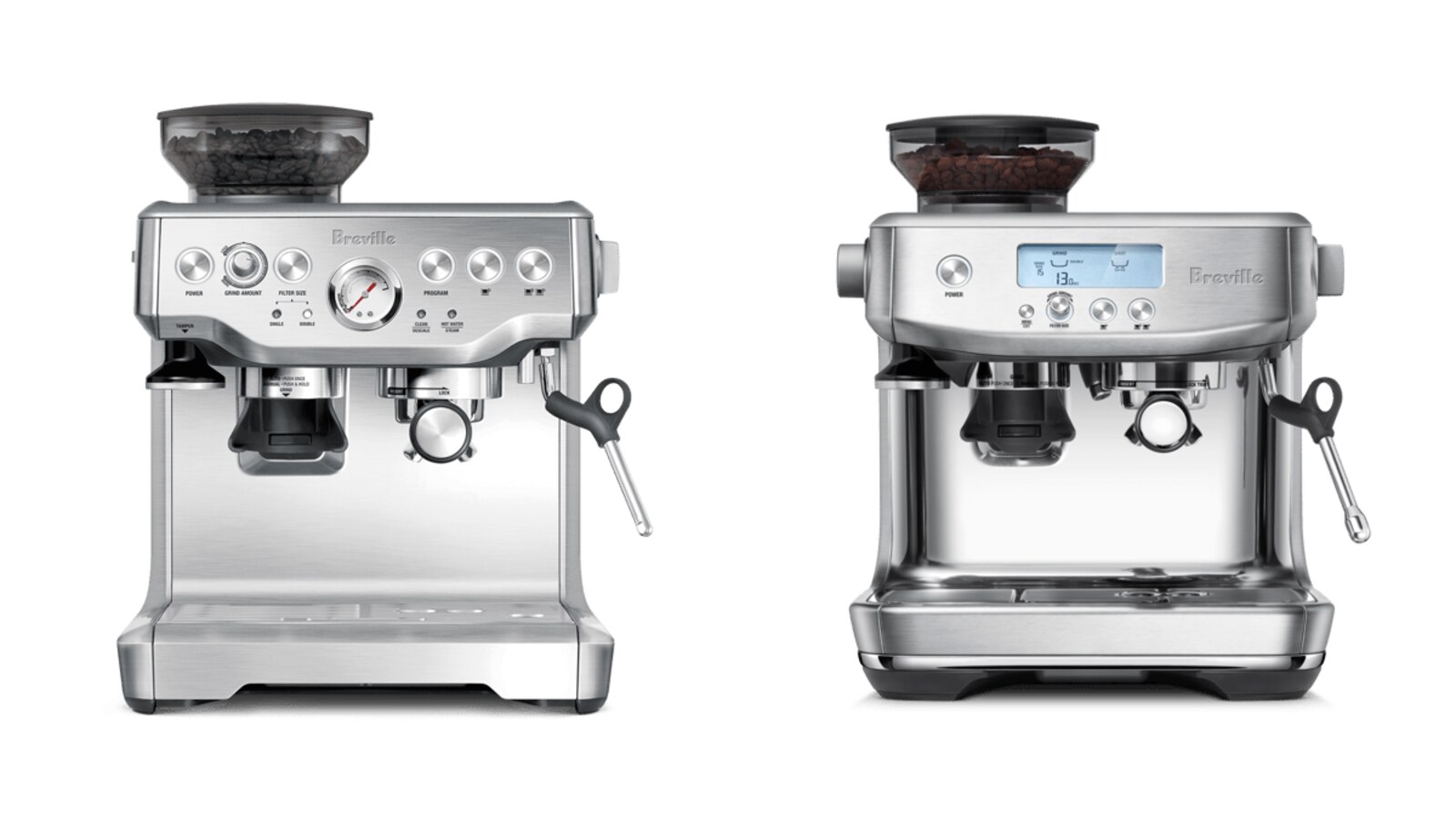
The Breville Barista Express and Barista Pro are the top-selling all-in-one espresso machines from Breville. They are often compared on this site. Both models grind, dose, tamp, and steam in one countertop unit, designed for those who want to avoid a separate grinder. The Barista Express has been Breville's entry-level option for over a decade. The Barista Pro includes a faster heating system and a digital display but costs about $250 more.
This comparison covers the grinder and dosing path, the practical heating system difference, the digital display, milk steaming, and a buy recommendation based on budget and daily routine.
Affiliate Disclosure: EspressoSnob participates in the Amazon Services LLC Associates Program. We earn commissions from qualifying purchases through our Amazon links at no extra cost to you. We recommend products based on specifications, performance, and value, not commission rates.
Quick Picks: Barista Express vs Barista Pro
| Machine | Heating System | Display | Best For | Price | Buy |
|---|---|---|---|---|---|
| Breville Barista Express | Thermocoil (~25-30 sec) | None (button interface) | Beginners, budget-conscious buyers, one-shot mornings without a rush | ~$749.95 | Check Price on Amazon |
| Breville Barista Pro (2600W) | ThermoJet (~3 sec) | Digital LCD extraction timer | Fast mornings, dialing in shot timing, multi-shot households | ~$999.95 | Check Price on Amazon |
Specs Head-to-Head
| Specification | Breville Barista Express | Breville Barista Pro |
|---|---|---|
| Price (MSRP) | $749.95 | $999.95 |
| Heating System | Thermocoil | ThermoJet |
| Heat-Up Time | ~25-30 seconds | ~3 seconds |
| Wattage | 1,600W | 1,600W (2,600W peak draw) |
| Display | None, button interface | Digital LCD with extraction timer |
| Grinder | Integrated conical burr, dial adjustment | Integrated conical burr, redesigned dosing chute |
| Portafilter Size | 54mm | 58mm |
| Pump Pressure | 15 bar | 15 bar (9 bar at group head via PID) |
| Water Tank | 67 oz (2L) | 84 oz (2.5L) |
| Steam Wand | Automatic, manual-adjust | Automatic, manual-adjust |
| Weight | 10.4 kg (23 lbs) | 10.8 kg (23.8 lbs) |
| Warranty | 1 year limited | 1 year limited |
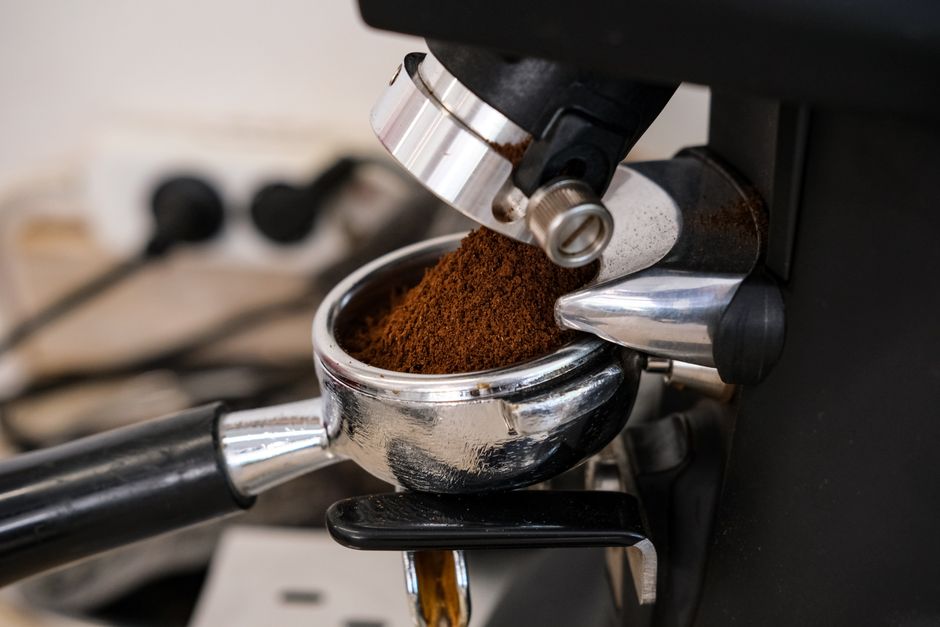
Grinder and Dosing: Shared DNA, Different Chute
Both models use Breville's integrated conical burr grinder, which grinds directly into a dosing funnel positioned over the portafilter. The grind quality is similar enough that it shouldn't be the deciding factor - the Pro has a redesigned chute and dosing path for better visibility, allowing you to see grounds landing in the portafilter.
The Barista Express uses a 54mm portafilter, standard in Breville's entry lineup. The Barista Pro upgrades to a 58mm portafilter, the same size used by commercial and prosumer machines, offering a larger dose capacity and access to a wider third-party accessory market if you want to upgrade later.
The Real Difference: Thermocoil vs ThermoJet
The key difference between these two machines lies in their heating systems, and it is significant.
The Barista Express uses a thermocoil heating system, which takes about 25-30 seconds to stabilize at the brewing temperature after being powered on or after a period of inactivity. This means that once you turn on the machine, you can grind, dose, and tamp your coffee, and by the time you are ready to lock in the portafilter, the machine is typically close to being ready. While this wait is not long, it does occur every time the machine has cooled down.
The Barista Pro, on the other hand, uses Breville's ThermoJet system, which heats up to brewing temperature in about 3 seconds from a cold start. This system eliminates the need for a warm-up period. Once you turn it on, you can grind and dose your coffee, and the machine will already be ready by the time you are done. For households that pull multiple shots in a row or for those who are rushed in the morning, this difference significantly reduces daily inconvenience.
If your grind-dose-tamp routine takes about 30 seconds, the Barista Express's thermocoil delay is negligible since you will be ready to brew either way. However, if your routine is quicker or you are pulling back-to-back shots, the Pro's ThermoJet system provides a real advantage.
Digital Display: Worth the Extra Cost?
The Barista Express lacks a display, relying instead on a set of buttons to control grind, dose, and shot timing. Users learn the machine's rhythm through practice and observation. This setup is traditional for home baristas, but it offers no built-in feedback beyond visual and taste cues.
The Barista Pro includes a digital LCD screen that shows a live extraction timer during the shot pull. This feature makes it easier to spot issues in real-time, such as a shot stalling at 15 seconds and not reaching the desired 25-30 seconds, indicating a potential channeling or grind-too-fine issue. While the display does not replace a scale for measuring doses and does not make the Pro a fully programmable machine, it is a useful upgrade for dialing in extraction times rather than just a marketing feature.
Milk Steaming and Build
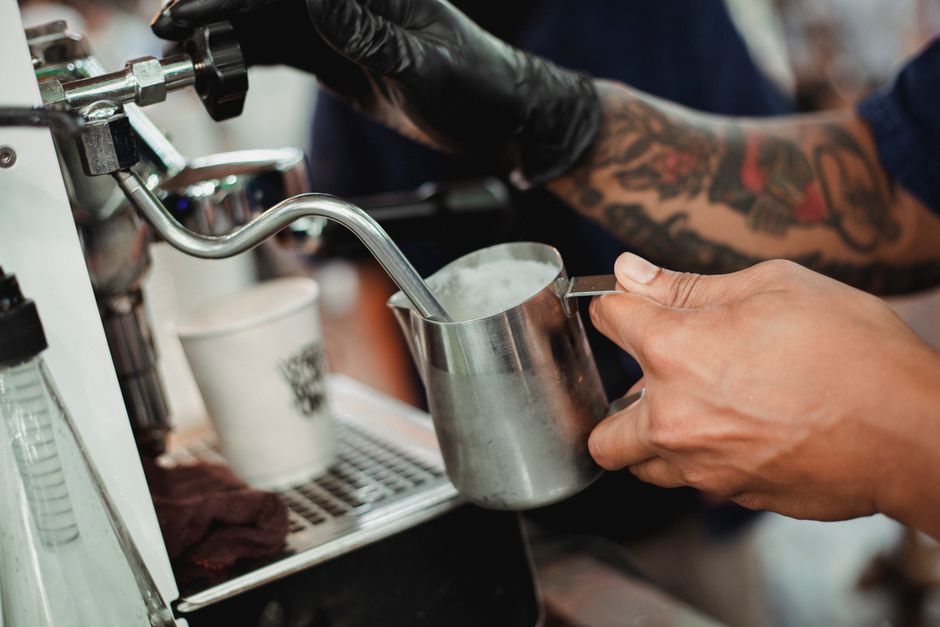
Both machines have the same automatic steam wand hardware and produce similar microfoam for lattes, cappuccinos, and flat whites. Milk texturing does not differ significantly; if steam performance is your main concern, both machines perform equally well.
The build quality is also similar. Both use a mix of stainless steel and plastic housing typical of Breville's consumer line, both have a 1-year limited warranty, and both weigh about 23 lbs. The Barista Pro's larger 2.5L water tank means fewer refills during heavy use, which is a small but real convenience for larger households.
Who Should Buy the Barista Express
Buy the Barista Express if:
- Your budget is around $750
- You make one or two shots at a normal, unhurried morning pace
- You do not need a digital display to adjust extraction time
- You prefer Breville's proven, decade-plus-refined entry machine
- You are new to home espresso and want the standard 54mm portafilter accessory ecosystem
Check Price on Amazon - Breville Barista Express
Who Should Buy the Barista Pro
Buy the Barista Pro if:
- You want near-instant heat-up and no thermocoil wait
- You are pulling multiple shots back to back for a household
- You want a live extraction timer to help dial in your shots
- You want the 58mm portafilter and its wider accessory market
- Your budget is $999.95 and faster, more efficient daily use is more important than saving $250
Check Price on Amazon - Breville Barista Pro (2600W)
How to Choose: Buyer's Decision Framework
Three questions can help you decide:
Question 1: What is your budget limit? If $750-800 is your limit, the Barista Express is the only real option - the Pro costs about $250 more. Do not stretch your budget for a faster boiler you do not need.
Question 2: How rushed is your morning routine? If you grind, dose, and tamp at a relaxed pace that already takes 25-30 seconds, the Barista Express's thermocoil delay is not noticeable. If you want to brew immediately, the Pro's ThermoJet system removes that wait.
Question 3: Do you want a display to help you learn extraction timing? If you are new to espresso and want visual feedback while pulling a shot, the Barista Pro's LCD timer is a helpful teaching tool. If you already judge shots by look and taste, the Barista Express's simpler interface will not hinder you.
If your budget allows either and you are unsure, buy the Barista Express first, learn your palate on the simpler interface, and upgrade to the Pro's ThermoJet speed once you know exactly what daily friction you want to remove.
Frequently Asked Questions
Is the Barista Pro worth $250 more than the Barista Express?
If quick heat-up time and grind visibility are important to you, then the Barista Pro is worth the extra cost. The Pro's ThermoJet heating system reaches the brewing temperature in about 3 seconds, whereas the Barista Express's thermocoil takes roughly 25-30 seconds to stabilize. The Pro also features a digital LCD display that shows extraction time and a clear top-hopper grind path. If you are okay with waiting half a minute for the boiler to heat up and do not need the display, the Barista Express offers nearly the same shot quality for a lower price.
Do the Barista Express and Barista Pro use the same grinder?
Both models use Breville's integrated conical burr grinder with similar grind settings. However, the Pro's grinder chute and dosing path are redesigned for better visibility and less mess. While the core grind quality is comparable, the difference lies in the workflow around the grinder, not the grind itself.
Does the Barista Pro heat up faster than the Barista Express?
Yes, it does. The Barista Pro uses Breville's ThermoJet heating element to reach brewing temperature in about 3 seconds from a cold start. In contrast, the Barista Express, with its thermocoil heating system, takes approximately 25-30 seconds to stabilize at brewing temperature. For users who need to make a quick shot before work, the Pro's near-instant heat-up significantly reduces daily inconvenience.
Can the Barista Express make milk-based drinks as well as the Barista Pro?
Yes, both machines use the same automatic steam wand technology and produce comparable microfoam for lattes and cappuccinos. Milk texturing performance is not a differentiator between these models, as the steam wand hardware and output are essentially identical.
Which machine is better for a beginner, the Barista Express or Barista Pro?
The Barista Express is the more forgiving choice for beginners. It is less expensive, and its slower thermocoil warm-up allows new users to prep grounds and dial in a shot without feeling rushed. The Barista Pro's LCD display and faster ThermoJet system are better suited for those who understand extraction times and want a faster, more efficient daily use rather than a learning aid.
Is the Barista Pro's digital display actually useful, or just a gimmick?
The digital display is genuinely useful for dialing in shots. The Barista Pro's LCD shows a live extraction timer during the pull, making it easier to spot channeling or a stalled shot in real time compared to the Barista Express's simple button interface. While it does not replace a scale for weighing doses, it serves as a valuable timing reference and is not just a cosmetic feature.
The 2026 Verdict
The Breville Barista Express and Barista Pro address the same espresso-making needs but at different speeds. Both models grind, dose, and steam in a single countertop unit, use a conical burr grinder with similar grind quality, and offer milk texturing suitable for home latte and cappuccino makers.
The Barista Express is ideal for those on a budget near $750 or with a morning routine that already takes 25-30 seconds to grind, dose, and tamp, as the thermocoil wait is negligible. The Barista Pro, however, is better for those who want to eliminate the wait entirely and benefit from a live extraction timer for faster and more precise dialing in of shots.
Choose the machine that best fits your morning routine, not just the one with more features. Both machines produce excellent espresso when properly dialed in.
Breville Barista Express: Check Price on Amazon | Breville Barista Pro: Check Price on Amazon
More Espresso Machine Guides
- Breville Barista Express: 6-Month Ownership Review
- Breville Barista Express Impress Review
- Breville Barista Pro: Full Review
- Baratza Encore ESP vs DF64 Gen 2: Which Espresso Grinder Wins?
- Espresso Channeling: Why It Happens and Exact Tamping Fix That Works
Affiliate Disclosure: EspressoSnob participates in the Amazon Services LLC Associates Program, an affiliate advertising program designed to provide a means for sites to earn commissions by linking to Amazon.com. We earn commissions from qualifying purchases made through our Amazon links at no additional cost to you. These commissions support our research, testing, and content creation. We recommend products based on specifications, performance, and value, not commission rates.
Photos provided by Pexels.