Espresso Grinder vs Regular Coffee Grinder: Why You Need Separate Grinders
Every new espresso owner asks the same question after buying a $600 machine: can I just use the $40 grinder I already have? The honest answer is no, and the reason isn't marketing. It's physics. Espresso forces water through packed coffee at 9 bars of pressure in under 30 seconds. Drip coffee lets gravity pull water through loose grounds over 3-5 minutes. Those are two different jobs, and a grinder built for one usually fails at the other.
This isn't a matter of taste preference or brand loyalty. A blade grinder or entry-level drip burr grinder physically cannot produce the grind size and consistency espresso needs. You can spend $1,000 on a machine and still pull sour, unbalanced shots because the grinder upstream is the actual bottleneck. Understanding exactly what separates the two grinder types tells you where to put your money first.
The Core Difference: Grind Range
Coffee particle size is measured in microns. Drip coffee typically brews best between 600-900 microns (think coarse kosher salt). Pour-over sits around 400-700 microns (fine sea salt). Espresso needs 200-400 microns - closer to powdered sugar or fine table salt, but not so fine it turns to dust.
A drip-focused grinder is engineered around the 400-900 micron range because that's where 90% of home coffee drinkers operate. The adjustment collar has physical stops or a limited number of steps clustered in that coarser zone. Push it to its finest setting and you might reach 400-450 microns - technically espresso-adjacent, but at the very edge of the machine's design, with no room to fine-tune from there.
A dedicated espresso grinder flips this. Its entire adjustment range is built around 200-400 microns, often with 10-60 discrete steps or a stepless collar inside that window. You get the resolution to move from a 22-second gushing shot to a 28-second balanced shot with a quarter-turn, because the whole mechanism exists to serve that narrow band precisely.
Why "it goes fine enough" isn't the same as "it's built for fine"
Some drip grinders advertise a setting labeled "espresso" on their dial. Treat this with skepticism. A dial label doesn't change the burr geometry or motor torque behind it. If the grinder's overall range spans 400-1200 microns and "espresso" is just the lowest number on that scale, you're getting the coarsest possible espresso grind the machine can produce - not a true espresso grind. Shots pulled from that setting typically run fast (18-22 seconds) and taste thin and sour because the grind is still too coarse for proper resistance.
The test is simple: check the manufacturer's stated micron range or step count. If a grinder has fewer than 20 adjustment increments total, or if its published range starts above 350 microns, it's a drip grinder wearing an espresso label.
Burr Geometry and Motor Speed
Beyond range, the physical burrs differ. Espresso grinders commonly use flat burrs (58-64mm are common home sizes) or conical burrs engineered for slower, cooler grinding at higher precision. Many entry drip grinders use smaller, simpler conical burrs (40mm or under) spinning at higher RPM to grind through beans quickly for a pot of coffee - speed matters more than micron-level precision when the target range is 3x wider.
Motor speed matters too. High-RPM grinders (1,400+ RPM) generate more heat through friction, which can prematurely warm and slightly degrade oils in the grounds - a bigger problem at espresso's fine settings where beans spend more time between the burrs. Espresso-focused grinders typically run at lower RPM (300-700 RPM) specifically to reduce heat buildup at fine settings, even though this makes them slower to grind a large batch.
This is also why a $150 drip grinder and a $150 espresso grinder can look similar on a shelf but perform completely differently once you dial in a shot. The espresso model spent its entire engineering budget on fine-range precision. The drip model spent it on speed and hopper capacity.
Blade Grinders: The Worst-Case Scenario
Blade grinders don't crush coffee between two fixed surfaces - they chop it with a spinning propeller blade, the same mechanism as a spice grinder. This produces a chaotic mix of particle sizes in every batch: some beans get pulverized to dust near the blade, others barely nick the edges and stay in large chunks.
For drip coffee, this inconsistency is forgiving because the long brew time and lower pressure average out the extraction across particle sizes. For espresso, it's catastrophic. The fine dust clogs the puck and blocks water flow in some areas. The larger fragments create open channels where water rushes through with almost no resistance. You get over-extracted bitter sludge from the dust pockets and under-extracted sour water from the channels, often in the same shot, from the same portafilter.
There is no tamping technique, dose adjustment, or machine upgrade that fixes a blade-ground shot. The problem originates before the coffee ever touches the portafilter. If you're using a blade grinder and wondering why your espresso tastes wrong despite following every other step correctly, this is the answer.
Particle Consistency: Why Espresso Punishes Unevenness
Every grinder produces a distribution of particle sizes, not a single uniform size - even good burr grinders create a bell curve with a target size in the middle and some fines and boulders at the edges. What separates a good espresso grinder from a mediocre one is how tight that bell curve is.
Drip coffee tolerates a wide distribution because water has minutes to find its way through loose grounds regardless of size variation. Espresso compresses that tolerance into 25-30 seconds under high pressure, so a wider particle distribution directly causes channeling - water finding the path of least resistance through gaps between larger particles instead of extracting evenly through the whole puck.
Burr flatness, burr alignment, and burr sharpness all affect this distribution. Cheap drip grinders often use burrs stamped from thinner metal with looser tolerances because a wider distribution barely affects drip flavor. Espresso grinders invest in precisely machined burrs, tighter alignment tolerances, and often larger burr diameters (which reduces the ratio of edge-effect particles to properly-cut particles) specifically to narrow that curve.
What This Costs in Practice
You don't need a $1,000+ commercial-grade grinder to get real espresso results at home. Entry dedicated espresso grinders start around $150-200 and already outperform any drip grinder at espresso's fine range, because they're purpose-built for it rather than stretched to cover it.
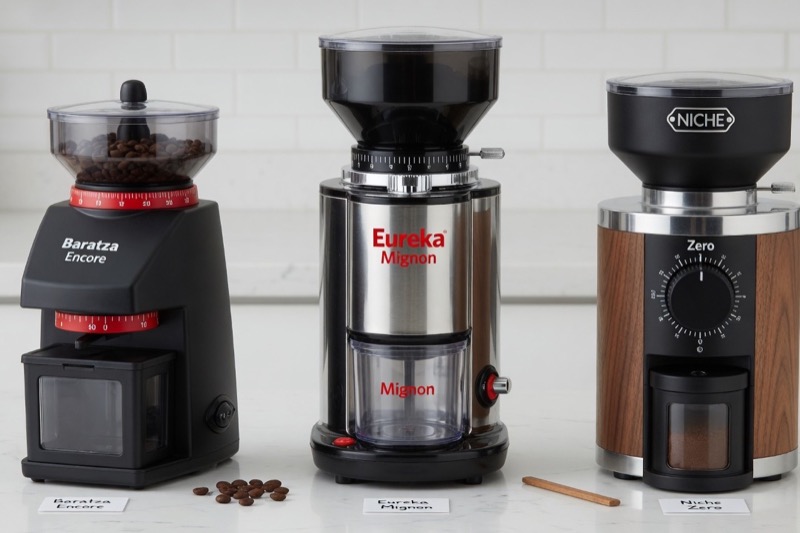
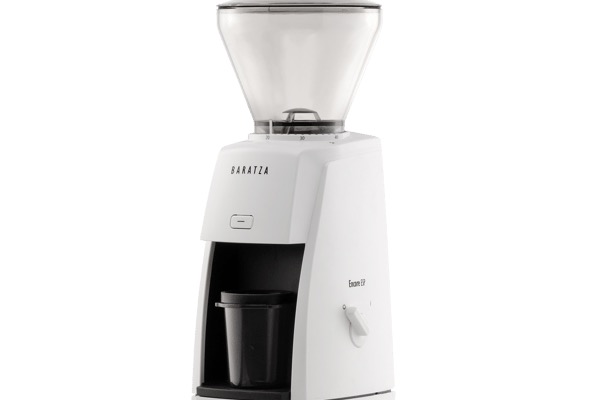
- Entry tier ($150-250): Grinders like the Baratza Encore ESP are drip-and-espresso capable, with a wider range covering both, at the cost of some fine-tuning precision compared to espresso-only models.
- Mid tier ($270-450): Grinders like the DF64 Gen 2 and Eureka Mignon Specialita focus primarily on espresso's fine range with flat burrs and stepless or fine-stepped adjustment, giving noticeably tighter shot consistency.
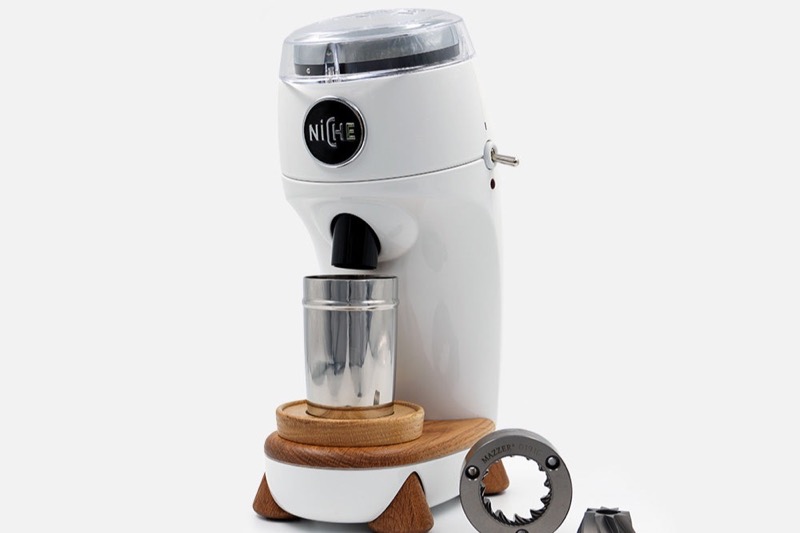
- Premium tier ($500+): Grinders like the Niche Zero add single-dose workflows (near-zero retention between beans and shots) and larger, slower-spinning conical burrs for maximum consistency and minimal heat transfer.
Compare that to trying to stretch a $300 all-purpose drip grinder to also handle espresso: you'll hit its coarse-side ceiling immediately and never get the fine-tuning resolution to dial in a proper shot, regardless of price paid. The purpose-built tool wins even when it costs less.
Can Any Grinder Do Both Jobs Well?
Some grinders are genuinely designed to cover both ranges competently. The Baratza Encore ESP, Eureka Mignon Specialita, and Niche Zero all publish micron ranges wide enough to handle drip, pour-over, and espresso with real accuracy at each end - not just a compromise in the middle. If you brew both regularly and only want one grinder, check for a stated range spanning roughly 200-900 microns with enough adjustment steps (20+) to give real resolution at the fine end, not just the coarse end.
What doesn't work: a $50-80 all-purpose grinder marketed as "grinds for everything from French press to espresso." These almost always cluster their adjustment steps in the coarse-to-medium range and treat the espresso setting as an afterthought - technically present, functionally useless.
A useful test before buying a dual-purpose grinder: search the model name plus "espresso" on community forums and read what owners actually report about the fine end of the range, not just the marketing copy. Owners who brew both regularly will mention specifically whether the fine settings choke, whether the steps near the espresso range are wide enough to dial in cleanly, and whether they eventually bought a second dedicated grinder anyway. That last detail is the most telling. If a meaningful share of owners of a "does both" grinder end up adding a dedicated espresso grinder within a year, the dual-purpose claim doesn't hold up in daily use.
Common Mistakes
Assuming any burr grinder is "good enough" because it's not a blade grinder. Burr grinders are a massive improvement over blade grinders for consistency, but a drip-range burr grinder still can't reach or hold espresso's fine settings with the precision needed. "Burr, not blade" is necessary but not sufficient.
Buying based on price instead of stated micron range. A $200 drip grinder and a $200 espresso grinder are not interchangeable. Check the manufacturer's published grind range and step count before buying, not just the price tag or general reviews.
Grinding espresso-fine in a grinder not built for it and blaming the machine or technique. If your shots run inconsistent despite perfect dosing, tamping, and machine settings, check whether your grinder can actually produce a tight, fine particle distribution. Often the grinder is the ceiling, not the skill.
Ignoring retention when switching between drip and espresso on a dual-purpose grinder. If you use one grinder for both, old grounds from a coarse drip session can linger in the chute and contaminate your next espresso dose. Purge 1-2g when switching grind ranges, not just when switching beans.
Overpaying for hopper capacity instead of grind precision. Large-hopper grinders marketed for convenience often sacrifice fine-adjustment resolution to keep costs down elsewhere. If espresso is the priority, a smaller-capacity, single-dose grinder with tighter adjustment usually beats a large-hopper grinder at the same price.
Skipping burr maintenance and assuming a grinder's fine-range limits are fixed. Oil buildup on burrs narrows the effective gap over time, which can make a marginal grinder seem to reach espresso-fine settings when it's actually just clogged. Clean burrs restore the true gap, and a grinder that seemed borderline capable may reveal itself as genuinely too coarse once cleaned. Don't confuse burr buildup with a wider usable range.
How to Check If Your Current Grinder Can Actually Do Espresso
Before buying a second grinder, confirm your current one is actually the limiting factor:
- Look up the manufacturer's stated micron range. If the finest setting is above 400 microns, it's not built for espresso.
- Count the adjustment steps. Fewer than 15-20 total steps means low resolution even if the range technically reaches fine settings.
- Set it to its finest setting and pull a shot. If it runs under 15 seconds even fully compressed and tamped hard, the grind can't get fine enough.
- Check the burr type. Blade grinders fail immediately regardless of any other factor. Small conical burrs under 40mm are more likely drip-focused.
- Look for excessive retention or clumping at fine settings - a sign the grinder wasn't engineered for that range and grounds are compacting instead of cutting cleanly.
If two or more of these point toward "not built for espresso," a dedicated grinder is the highest-impact upgrade you can make - more impactful than a better machine, in most home setups.
The Bottom Line
The difference between an espresso grinder and a regular coffee grinder isn't marketing - it's grind range, burr geometry, motor speed, and particle consistency, all engineered around two very different brewing physics. Drip coffee's long, low-pressure brew tolerates a wide, coarse grind distribution. Espresso's short, high-pressure extraction punishes any inconsistency instantly, turning uneven particles into channeling, sour under-extraction, and bitter over-extraction in the same shot.
A machine upgrade cannot fix a grinder problem. If your shots have been inconsistent no matter how carefully you dose, distribute, and tamp, check the grinder before you check anything else. A $200 grinder built specifically for espresso's fine range will out-produce a $400 all-purpose drip grinder every time, because it was never asked to do two jobs at once.
If you already own a wide-range grinder that genuinely covers both drip and espresso microns with real adjustment resolution, you don't need two machines. But if your current grinder tops out around 400-500 microns with a handful of coarse steps, that's your answer: the grinder is the bottleneck, not your technique.
Related Reading
- Best Espresso Grinders Tested: Flat vs Conical Burrs, Single-Dose, Budget to High-End
- 7 Espresso Grinder Mistakes Ruining Your Shots
- Espresso Grind Size Mastery: Fix Every Shot Problem
FAQ
Can you use a regular coffee grinder for espresso?
Technically you can put grounds from a regular grinder into a portafilter, but you will not get real espresso. A blade grinder produces wildly uneven particle sizes that channel and choke unpredictably, and most burr grinders built for drip coffee stop at a grind range too coarse for espresso's 9-bar pressure. The shot will either gush thin and sour in 8-10 seconds or clog and drip bitter sludge. Neither is espresso.
What's the real difference between an espresso grinder and a drip coffee grinder?
Three things: grind range, adjustment resolution, and particle consistency. Espresso grinders offer a fine-enough range (roughly 200-400 microns) with 10-60+ micro-adjustment steps or stepless dials so you can fine-tune extraction time by 1-2 seconds. Drip grinders top out finer settings around 400-500 microns with 8-15 coarse steps meant for pour-over and drip, not the powder-fine, uniform grind espresso needs to resist 9 bars of pressure without channeling.
Do I need a $500 grinder to make good espresso at home?
No. Entry-level dedicated espresso grinders like the Baratza Encore ESP (around $170) or DF64 Gen 2 (around $270-300) will out-perform any $500 all-purpose drip grinder for espresso, because they're built with espresso's grind range and burr geometry in mind. Budget is better spent on a grinder built for the job than a more expensive grinder built for the wrong job.
Can one grinder do both drip coffee and espresso well?
Some grinders handle both reasonably well if they have a wide adjustment range covering both fine (espresso) and coarse (drip/French press) settings - the Baratza Encore ESP, Eureka Mignon Specialita, and Niche Zero all do this. But dedicated all-purpose grinders with a narrow range built primarily for drip will disappoint on the espresso end. Check the manufacturer's stated micron range before assuming a grinder covers both.
Why does grind consistency matter more for espresso than drip coffee?
Drip coffee brews with gravity over 3-5 minutes at roughly atmospheric pressure, so uneven particles average out across a longer contact time. Espresso forces water through a compacted puck at 9 bars in 25-30 seconds. Inconsistent particles create channels of least resistance - water rushes through the coarse gaps around the fine particles, causing uneven extraction that tastes sour in some sips and bitter in others from the same shot.
What happens if I grind espresso-fine in a blade grinder?
A blade grinder chops beans with a spinning propeller instead of crushing them between two fixed surfaces. Running it longer to get a fine grind creates a mix of powder-fine dust and larger uncut fragments in the same batch, plus heat from friction that can scorch the coffee. The dust clogs the espresso puck and stops water flow entirely in spots, while the larger fragments let water rush through elsewhere. The result is an unevenly extracted, often burnt-tasting shot no matter how carefully you tamp.