Affiliate Disclosure: EspressoSnob participates in the Amazon Services LLC Associates Program. We earn commissions from qualifying purchases through our Amazon links at no extra cost to you. We recommend products based on specifications, performance, and value, not commission rates.
Which is Better: Rancilio Silvia Pro X or Profitec Go?
The Profitec Go wins for most home baristas - it delivers genuine PID-controlled espresso at $1,199 in a compact footprint, with $800 left over for a quality grinder. The Rancilio Silvia Pro X is the right call for households pulling 3+ drinks per session: its dual-boiler architecture lets you brew and steam simultaneously, and a 25-year parts ecosystem means the machine is repairable indefinitely. Choose the Go if budget and bench space are constraints. Choose the Pro X if simultaneous workflow and long-term repairability are requirements.
Two machines dominate the premium single-boiler conversation in 2026: the Rancilio Silvia Pro X and the Profitec Go. Both pull excellent espresso. Both use 58mm commercial portafilters. Both attract the same buyer - someone ready to spend $1,000-2,000 on a machine that won't embarrass them. The difference comes down to boiler architecture, workflow, and what you're actually willing to pay for.
This comparison uses published specs, owner reviews from r/espresso, and long-term reliability data from machines that have been in daily home use for 2+ years. No sponsored content. No manufacturer talking points.
Quick Picks
| Machine | Boiler | PID | Heat-Up | Price | Best For |
|---|---|---|---|---|---|
| Rancilio Silvia Pro X | Dual boiler | Dual PID | 5-10 min | ~$1,990 | Multi-drink workflow, milk drinks, serious home baristas |
| Profitec Go | Single boiler | Yes | 5-7 min | ~$1,199 | Solo baristas, compact kitchens, value-focused buyers |
| Silvia Pro X (Black) | Dual boiler | Dual PID | 5-10 min | ~$1,990 | Same as Pro X, black finish |
The Core Distinction: Single Boiler vs Dual Boiler
This comparison is ultimately about boiler architecture. The Profitec Go is a single-boiler machine with a PID. The Rancilio Silvia Pro X is a dual-boiler machine with separate PIDs for brew and steam.
That difference drives everything else - workflow, wait time between drinks, temperature stability under load, and price.
Single boiler (Profitec Go): One boiler handles both brewing and steaming. To pull a shot, the boiler runs at brew temperature (around 200-203F). To steam milk, it heats to a higher temperature (around 265F). You pull the shot first, then switch modes and wait for the boiler to climb to steam temperature - typically 60-90 seconds on the Go, which is fast for a single-boiler machine. Then you steam. Making three lattes back-to-back means repeating that thermal cycle three times.
Dual boiler (Rancilio Silvia Pro X): One boiler stays at brew temperature. A separate steam boiler stays hot at all times. Pull a shot and immediately texture milk simultaneously - or hand the pitcher to whoever is waiting at the machine. No mode switching. No waiting. The workflow is closer to a commercial setup.
For one person making one drink per morning, the Profitec Go's 60-90 second thermal transition is a minor inconvenience. For anyone making multiple drinks per session, it compounds fast.
Specs Head-to-Head
| Specification | Rancilio Silvia Pro X | Profitec Go |
|---|---|---|
| Boiler type | Dual boiler (brass) | Single boiler (brass) |
| Brew boiler capacity | 0.3L | 0.4L |
| PID control | Dual PID (brew + steam) | Single PID |
| Portafilter | 58mm commercial | 58mm commercial |
| Concurrent brew/steam | Yes | No |
| Pre-infusion | Yes | Yes |
| Shot timer | Yes | Yes |
| Water tank | 2.1L | 2.8L |
| Heat-up time | 5-10 min | 5-7 min |
| Weight | 44 lbs (20 kg) | 28 lbs (12.7 kg) |
| Dimensions (W x D x H) | 10.2 x 16.5 x 15.7 in | 8.3 x 14.3 x 15 in |
| Country of manufacture | Italy | Germany |
| Street price (2026) | ~$1,990 | ~$1,199 |
Build Quality and Materials
Both machines are built to last. Neither feels like a consumer appliance dressed in stainless steel. They feel like tools.
Rancilio Silvia Pro X: The Silvia line has been in continuous production since 1997. That is not a marketing point - it is a reliability signal. The Pro X uses a commercial-grade group head with brass construction and a saturated brew group design that maintains thermal stability. At 44 pounds, the machine does not move when you lock in the portafilter. The build is Italian semi-commercial, and the parts ecosystem reflects that: gaskets, shower screens, solenoid valves, and boiler components are stocked worldwide. r/espresso community sentiment scores the Pro X at 83% positive across 236 reviews, with "bullet proof" appearing as a recurring descriptor. For how the base Silvia line compares against an entry-level single-boiler, see our Gaggia Classic Pro vs Rancilio Silvia breakdown.
Profitec Go: German engineering, 28 pounds, 8.3 inches wide. This is a compact machine by prosumer standards. The brass boiler with PID, adjustable OPV, and pre-infusion at this price point earned it Forbes Vetted's "Best Espresso Machine For Enthusiasts" designation in 2026. The no-burn steam wand tip is a quality-of-life detail that matters daily. The 2.8L reservoir edges out the Pro X's 2.1L, which is relevant if you pull a lot of shots before refilling. Profitec warranty is 3 years; Rancilio is 2 years limited.
Shot Quality at the Boundary
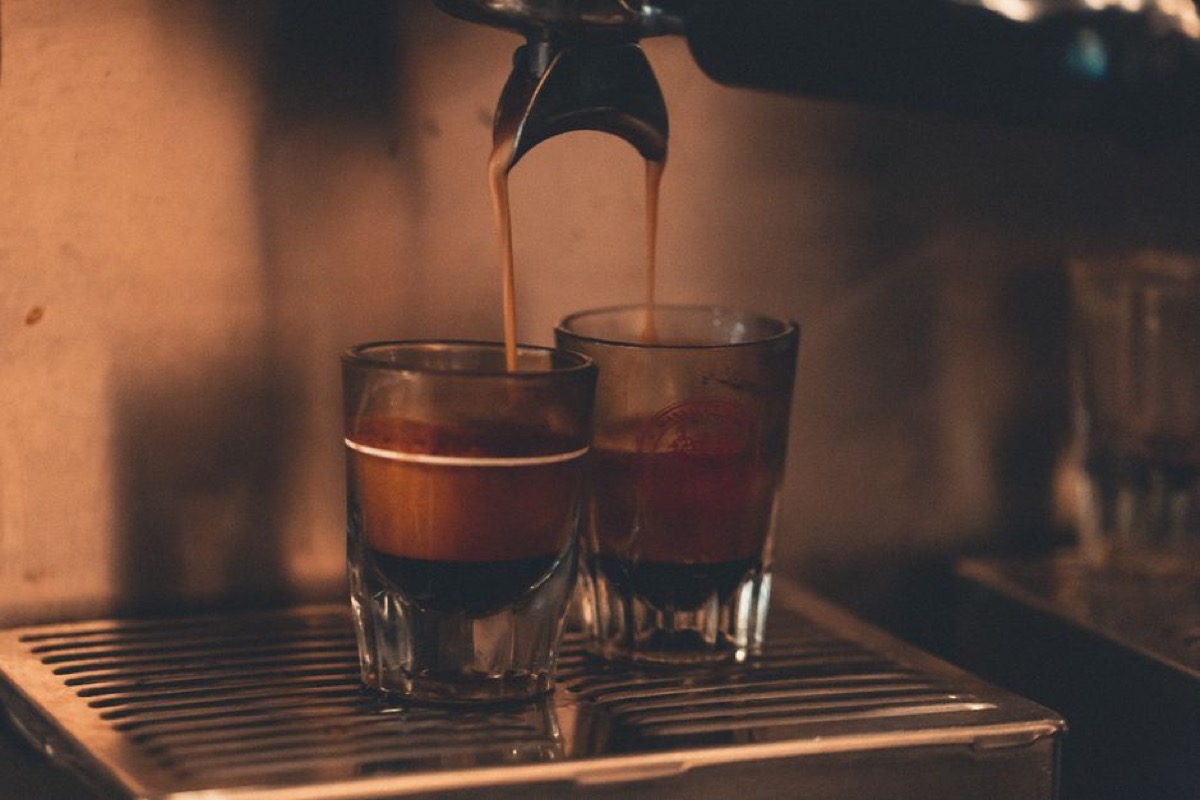
Both machines produce excellent espresso when paired with a quality grinder. At this price tier, machine-induced shot variance is small compared to grind variance. That said, there are real differences.
The Profitec Go's PID holds brew temperature tightly on a single shot. Where it shows strain is back-to-back shots - the smaller thermal mass of a single-boiler machine means the second shot starts at a slightly different temperature than the first if you pull them in quick succession. This is measurable but not meaningful to most home baristas who are not chasing 0.2-degree consistency.
The Rancilio Silvia Pro X's dedicated brew boiler maintains temperature across multiple consecutive shots more consistently, because the steam boiler is thermally isolated. When the steam boiler heats up to serve milk after your first shot, it does not affect brew temperature at all. For high-volume home setups (4+ drinks per morning), this separation matters.
Both machines benefit from pre-infusion - a brief low-pressure saturation of the puck before full extraction pressure builds. Pre-infusion reduces channeling and produces more even extraction, particularly with lighter roasts and finely ground coffee. Both the Go and the Pro X include this feature.
Steam Wand Comparison
This is where the dual-boiler architecture pays off most visibly.
Profitec Go steam performance: The Go's steam is genuinely impressive for a single-boiler machine. Reviewers consistently note it transitions from brew to steam mode in about 60 seconds - about half the time of older single-boiler machines like the base Silvia M V6. The steam pressure is sufficient for microfoam, and the multidirectional no-burn wand tip makes technique accessible for intermediate baristas. What it cannot do is steam while pulling a shot.
Rancilio Silvia Pro X steam performance: The Pro X has a dedicated steam boiler, which means it is always at steam temperature, always at full pressure, always ready. There is no wait. You can hand someone a shot while simultaneously texturing milk. Steam pressure is strong and consistent across back-to-back drinks. The commercial-style wand requires more technique to prevent over-texturing - this is not a flaw, it is how high-powered steam wands work, and it rewards learning proper pitching angles.
The verdict: if you make one drink per session, the Go's steam is fine. If you are making multiple lattes or cappuccinos, the Pro X's simultaneous workflow is the correct tool.
Real Owner Data: 2-Year Reliability
Spec sheets tell you what a machine is designed to do. Two years of daily use tells you what it actually does.
Rancilio Silvia Pro X long-term data: The Silvia Pro X community on r/espresso is one of the larger machine-specific communities. Common long-term observations: the machine runs reliably with standard maintenance (backflushing, descaling), gaskets last 12-18 months under daily use, and the solenoid valve occasionally needs attention after 2-3 years. Critically, when something does fail, parts are available and the machine is repairable. Multiple owners report 5+ years of daily use without major service events. One r/espresso thread noted: "I would have no hesitation purchasing a refurbished Pro X because they're incredibly reliable."
Profitec Go long-term data: The Go is a newer machine with a shorter field history than the Silvia line. Early owners report it runs cleanly through year 2 with no major issues. The Profitec 3-year warranty provides coverage the Rancilio 2-year warranty does not. Authorized service centers in the US handle repairs; parts availability is narrower than the Silvia ecosystem but not problematic for owners within warranty. The German build quality reputation of Profitec (the same family as ECM) suggests longevity, but the 10-year track record simply does not exist yet for this specific model.
Who Should Buy the Profitec Go
- Solo baristas who pull one or two shots per session without needing simultaneous steam
- Counter space is limited - at 8.3 inches wide, the Go fits where the Pro X does not
- Budget ceiling around $1,200 - the Go delivers genuine prosumer performance without the dual-boiler premium
- Beginners stepping into prosumer territory - the modern digital controls and consistent PID make the learning curve manageable
- You want a longer warranty - Profitec's 3-year coverage beats Rancilio's 2-year limited
Check Price on Amazon - Profitec Go
Who Should Buy the Rancilio Silvia Pro X
- Households pulling 3+ drinks per session - the simultaneous brew/steam workflow is not a convenience, it is a time saving
- Serious home baristas who want commercial workflow in a home-scale machine
- Long-term buyers who want a machine with a proven 25-year parts ecosystem behind it
- Anyone who has already owned a single-boiler machine and knows the sequential workflow is a constraint
- You value repairability - the Silvia Pro X can be maintained and repaired indefinitely with off-the-shelf parts
Check Price on Amazon - Rancilio Silvia Pro X
What to Avoid in This Price Range
At $1,000-2,000, there are several machines that look compelling on spec sheets but underdeliver in practice:
Avoid machines with plastic group heads at this price point. Brass and stainless group heads maintain thermal stability; plastic cannot. Any machine spec'd at $1,200+ with a plastic brew group is cost-cutting in the wrong place.
Avoid "prosumer" machines from mass-market appliance brands that lack a repair ecosystem. When the heating element fails in year 3, you want to buy a $40 part - not a $1,200 replacement machine.
Avoid super-automatics in this price range if espresso quality is the priority. A $1,500 super-automatic produces acceptable espresso automatically but cannot match the shot quality ceiling of a manual machine with a good grinder at the same price. Super-automatics optimize for convenience, not quality.
Pairing: Grinders for Each Machine
Both the Profitec Go and the Rancilio Silvia Pro X use a 58mm commercial portafilter and reward a quality burr grinder. The grinder is not optional - it is half the system.
At the Profitec Go price point (~$1,199 for the machine): The Eureka Mignon Specialita or Baratza Sette 270 are natural pairs. Both grinders produce consistent particle distribution suitable for these machines at $300-400. Total system cost: approximately $1,500-1,600 for genuinely prosumer-quality espresso at home.
At the Rancilio Silvia Pro X price point (~$1,990 for the machine): Step up to the Niche Zero or DF64 Gen 2 for single-dose grinding with tight retention and superior particle distribution. At $600-700, these grinders match the Pro X's ceiling. Total system cost: approximately $2,600-2,700 for a setup that rivals commercial output in the cup.
See the full grinder comparison: DF64 vs Eureka Mignon Specialita and Best Espresso Grinder Under $300.
The 2026 Verdict by User Type
Solo home barista, one drink per morning, counter space tight: Profitec Go. It is the smarter buy. The PID delivers shot consistency you will actually use, the compact footprint fits real kitchens, and the $800 you save versus the Pro X buys you a genuinely good grinder.
Household of 2+, multiple drinks per session, serious about espresso: Rancilio Silvia Pro X. The simultaneous brew and steam workflow is not a luxury at this point - it is what the machine is for. The 25-year repair ecosystem and the proven long-term reliability make it the defensible buy for someone who intends to use the machine daily for 10+ years.
Upgrading from a Breville Barista Express or similar entry machine: The Profitec Go is the more sensible step. It represents a genuine upgrade in shot quality and temperature precision without the jump to dual-boiler complexity and cost. Buy it, learn it properly with a good grinder, and decide in 2 years whether you need simultaneous brew/steam.
Frequently Asked Questions
Is the Rancilio Silvia Pro X worth the price over the Profitec Go?
Yes, if you want a dual-boiler machine that can brew and steam simultaneously. The Silvia Pro X runs around $1,990 versus $1,199 for the Profitec Go. That $800 premium buys you separate brew and steam boilers with independent PID control. For households pulling 3+ drinks per session, the Pro X workflow is meaningfully faster and worth the premium.
Does the Profitec Go have PID temperature control?
Yes. The Profitec Go includes a PID controller as standard - one of its key advantages over the base Rancilio Silvia M V6. The Go's PID holds brew temperature within tight tolerances session to session. The Rancilio Silvia Pro X has dual PIDs, one for each boiler.
How long does the Profitec Go take to heat up?
The Profitec Go heats to brew temperature in approximately 5-7 minutes and switches from brew mode to steam mode in about 60 seconds - significantly faster than older single-boiler machines requiring 10-15 minutes. The Rancilio Silvia Pro X takes 5-10 minutes but needs no mode switching since dedicated boilers handle each function independently.
Which machine is better for milk drinks like lattes and cappuccinos?
The Rancilio Silvia Pro X wins for milk drinks, especially multiple drinks in a row. Its dedicated steam boiler delivers consistent pressure without thermal cycling. The Profitec Go produces excellent microfoam but requires switching modes between pulling the shot and steaming - adding 60-90 seconds per drink. For 2+ milk drinks per session, the Pro X workflow is the right tool.
Can I get replacement parts easily for the Rancilio Silvia Pro X?
Yes. The Rancilio Silvia line has been in production since 1997 and parts availability is exceptional. Gaskets, shower screens, solenoid valves, and boiler components are stocked by dozens of suppliers worldwide. The Profitec Go has authorized US service centers but a narrower aftermarket parts network than the Silvia ecosystem.
What grinder pairs best with the Profitec Go or Rancilio Silvia Pro X?
Both use 58mm commercial portafilters and reward a quality burr grinder. At the Go price point, pair with a Baratza Sette 270 or Eureka Mignon Specialita ($300-400). At the Pro X price point, step up to a Niche Zero or DF64 Gen 2 ($600-700) for single-dose precision that matches the machine's ceiling. Blade grinders will sabotage either machine.
Is the Profitec Go good for beginners?
Yes, with the right grinder. The Profitec Go's PID and modern controls make it accessible compared to older single-boiler machines that required temperature surfing. The 5-7 minute heat-up is predictable, the shot timer is built in, and the no-burn steam wand tip reduces the learning curve. The main caveat: the Go still requires a capable burr grinder (Baratza Sette 270 or equivalent) to produce its potential. Pair it with a blade grinder and you will blame the machine for grind problems it cannot fix.
The 2026 Verdict
Two excellent machines, one fundamental architectural choice. The Profitec Go is the smarter buy for most home baristas - PID control, compact build, fast heat-up, and $800 left over for a proper grinder. The Rancilio Silvia Pro X is the right machine for households that have outgrown the single-boiler wait and want a machine that will run reliably for 10+ years with a parts ecosystem behind it that will still exist when the machine needs service.
Buy the Go if the price delta matters to your total system budget. Buy the Pro X if simultaneous brew and steam is a workflow requirement and you intend to own this machine for the long term.
Both machines are available through Amazon with current pricing:
Related reading: Best Espresso Machine Under $1000 - Best Espresso Machine Under $2000 - DF64 vs Eureka Mignon Specialita Grinder Comparison
Affiliate Disclosure: EspressoSnob participates in the Amazon Services LLC Associates Program, an affiliate advertising program designed to provide a means for sites to earn commissions by linking to Amazon.com. We earn commissions from qualifying purchases made through our Amazon links at no additional cost to you. These commissions support our research, testing, and content creation. We recommend products based on specifications, performance, and value, not commission rates.
Photos provided by Pexels.